Yesterday a friend and I hung out in Georgetown, walking around and checking out all the little shops there. And wondering about why the people of Georgetown and neighboring Silver Plume have such an affinity for the color purple. I didn't make a tally of all colors of all buildings, so perhaps since it is such a unique building color there seemed to be a disproportionate number of purple buildings. I've nothing against purple; I'm just not used to seeing it. Perhaps, as my friend suggested, at one time there was a sale on purple paint. One building was closer to mauve; we speculated that was the last of the purple paint, mixed with white in order to stretch it.
All that walking around in brisk mountain air considerably cooler than what we've been used to in Denver stimulated our appetites. At the visitor's center we looked at a list of local restaurants and the woman who worked there told us Ed's 1859 Cafe had "the best burgers in town." Well, a statement like that, you just have to check out! Not having sampled the hamburgers in other area restaurants, I cannot say if they truly have the "best in town" - we plan to return to Georgetown for further investigation - but their cheeseburgers were good! I got mine with all the fixins, save mayonnaise, and all the lettuce, tomatoes, onions, catsup, mustard and pickles fell out the edges of the burger. Now, I know that many people think a "real" burger is nice and neat, staying inside a bun and having minimal condiments and vegetables. Nope, sorry. A real cheeseburger has all the fixings, requires two hands to eat and requires at least two napkins. Their Angus burgers come with your choice of cheeses and in quarter or half pound sizes. We didn't try the sweet potato fries, but they did look yummy, as did the soups I saw many of the customers ordering.
It's a popular spot, apparently: it was so busy we had to arm wrestle an elderly couple for the last table. Okay, I made that up. A table did open up by the time we got to the counter to place our orders. But clearly there was both a regular clientele there and other tourists like ourselves, and although there was outside seating available, they weren't hurting for customers.
The back of their menu had a picture of "Ed", also known as "Edwina", a dog who lived for 16 years before going to doggy heaven. Next time I go I'll have to ask for the story behind the naming of the cafe.
Sunday, October 10, 2010

Tuesday, September 28, 2010
Words that simply aren't used often enough
Okay, I admit it. I am a word geek. There, I have said it. There are some words which simply say things better than their more common counterparts. Here's a challenge for my readers: use these words in conversation during the next week.
>>> akimbo
with hands on hips, elbows bent outward.
Peter Pan stood akimbo whilst mocking Captain Hook. In comic books, the villains stand akimbo while laughing maniacally over their nefarious plans, while costumed superheroes stand akimbo, their country's flag flapping majestically behind them, after defeating nefarious malefactors. Don't just stand there, people! Be you good or evil, if you truly want people to take notice of you, stand akimbo!
>>> gelid
very cold, icy, frosty. Latin, 1600–10; gelidus icy cold.
Choosing to take public transportation rather than driving to work, I find myself being exposed to extremes in temperatures which challenge the wisdom of that choice. Most days, I don't mind; I relish the relative coolness of early morning in late summer or the "brisk" walk to the bus stop in the winter before the sun has risen. But there are days where the descriptions of "hot" and "cold" fall short. I discovered a splendid word last year. A coworker asked me how cold my walk in had been. I replied it was positively gelid. At his request I defined the word and he suggested I might be but one of a handful of people on the planet who would ever use it. Nonetheless, I insisted, for the day in question, no other word would do. A week or so later he pointed me to a story in the local paper where a sportswriter describe a recent game night using that very term. I felt justified; my coworker remained unconvinced. A couple months ago, I came across the word in Christopher Fowler's mystery The Victoria Vanishes. So I see the word isn't entirely extinct. However it might need help of people like you to give it the recognition it deserves.
>>> kerfuffle
a great commotion.
This is a great word I used once to quell an escalating argument among the children of some friends. "Hey!" I demanded, "What's all the kerfuffle about?" Each child immediately began to defend his own stance, and then the commotion petered out as the new word sunk in. I believe the meaning was readily discerned - after all, they knew they were squabbling, and that an adult would intervene for no other reason. But new knowledge rendered their arguments moot, and peace was restored, at least temporarily.
>>> malefactor
a criminal; a person doing harm or evil toward another.
>>> nefarious
wicked, vile, from Latin nefarious, equiv. nefās offense against divine or moral law.
The sorts of deeds malefactors commit. Some criminals are merely bad; others are nefarious!
>>> rascal
a dishonest or unscrupulous person; a mischievous person or animal.
Whichever meaning you chose, unscrupulous person or mischievous person, this word has sadly fallen out of common use. How could this happen? I was reminded of this wonderful word by being referred to as such (second meaning, thankfully) a couple weeks ago. Not as common as they once were, but are still recognized by most people, are hooligan, whippersnapper and scoundrel. Meriting honorable mentions are rapscallion, varlet and miscreant.
So there you have it: a dozen words which not only convey specific meanings, but are fun to say and will make you the life of any party. Well, maybe not the life of the party. But using these words will certainly leave an impression upon others.
>>> akimbo
with hands on hips, elbows bent outward.
Peter Pan stood akimbo whilst mocking Captain Hook. In comic books, the villains stand akimbo while laughing maniacally over their nefarious plans, while costumed superheroes stand akimbo, their country's flag flapping majestically behind them, after defeating nefarious malefactors. Don't just stand there, people! Be you good or evil, if you truly want people to take notice of you, stand akimbo!
>>> gelid
very cold, icy, frosty. Latin, 1600–10; gelidus icy cold.
Choosing to take public transportation rather than driving to work, I find myself being exposed to extremes in temperatures which challenge the wisdom of that choice. Most days, I don't mind; I relish the relative coolness of early morning in late summer or the "brisk" walk to the bus stop in the winter before the sun has risen. But there are days where the descriptions of "hot" and "cold" fall short. I discovered a splendid word last year. A coworker asked me how cold my walk in had been. I replied it was positively gelid. At his request I defined the word and he suggested I might be but one of a handful of people on the planet who would ever use it. Nonetheless, I insisted, for the day in question, no other word would do. A week or so later he pointed me to a story in the local paper where a sportswriter describe a recent game night using that very term. I felt justified; my coworker remained unconvinced. A couple months ago, I came across the word in Christopher Fowler's mystery The Victoria Vanishes. So I see the word isn't entirely extinct. However it might need help of people like you to give it the recognition it deserves.
>>> kerfuffle
a great commotion.
This is a great word I used once to quell an escalating argument among the children of some friends. "Hey!" I demanded, "What's all the kerfuffle about?" Each child immediately began to defend his own stance, and then the commotion petered out as the new word sunk in. I believe the meaning was readily discerned - after all, they knew they were squabbling, and that an adult would intervene for no other reason. But new knowledge rendered their arguments moot, and peace was restored, at least temporarily.
>>> malefactor
a criminal; a person doing harm or evil toward another.
As most translations of the Bible render Luke 23: 33, Jesus was crucified between two "criminals". At least one translation refers to the other men as "evil-doers", which comes closer to the Latin root malefactor: to act wickedly, do an evil. Both the King James version and the Darby translation give us a little extra flavor: "And when they were come to the place, which is called Calvary, there they crucified him, and the malefactors, one on the right hand, and the other on the left." Now doesn't that just sound more intriguing than "criminals"?
>>> nefarious
wicked, vile, from Latin nefarious, equiv. nefās offense against divine or moral law.
The sorts of deeds malefactors commit. Some criminals are merely bad; others are nefarious!
>>> rascal
a dishonest or unscrupulous person; a mischievous person or animal.
Whichever meaning you chose, unscrupulous person or mischievous person, this word has sadly fallen out of common use. How could this happen? I was reminded of this wonderful word by being referred to as such (second meaning, thankfully) a couple weeks ago. Not as common as they once were, but are still recognized by most people, are hooligan, whippersnapper and scoundrel. Meriting honorable mentions are rapscallion, varlet and miscreant.
So there you have it: a dozen words which not only convey specific meanings, but are fun to say and will make you the life of any party. Well, maybe not the life of the party. But using these words will certainly leave an impression upon others.
Friday, September 17, 2010
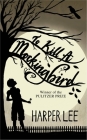
Re-read: "To Kill a Mockingbird"
This past July marked the 50 year anniversary of the publication of "To Kill a Mockingbird". It has long been one of my favorite books, one I read every five years or so. I had planned to re-read it this year before knowledge of the anniversary came to me, so the many news stories I heard on NPR made for a happy coincidence.
This time I had decided to listen to the audio version. I don't know how many times I have read the book nor do I remember how old I was when I first read it (I think I was around twenty.) Each time I read it my own life experiences give me the opportunity to experience the story with new eyes, and this time was no exception. Part of that might be listening to it rather than reading it. Having someone read to you is a delicious experience, especially if the narrator can speak in the character's voice. I don't mean voice imitations; I don't mean a woman narrator speaking like a man or vice versa, although that does add richness to the experience (anyone who has ever heard the myriad of voices Jim Dale evokes while narrating the Harry Potter books knows what I mean there.) Rather, I mean a narrator who draws the listener into the story so completely as to make it sound like you are hearing the story firsthand. Roses Pritchard narrated the version I listened to, and she is such a narrator.
The story is one of the handful of books Hollywood ever got "right". But as powerful as the movie was, and as wonderful as Gregory Peck portrayed Atticus Finch, the movie pales in comparison to the power of the book. It is of course a tale of racial prejudice and injustice and a small town's awakening consciousness. Some have criticized the novel for what they consider its one dimensional portrayal of African Americans, and for perpetuating a more subtle form of racism by an equally one dimensional portrayal of whites as saviors. If the story were set today, or even at the time the book was written, fifty years ago at the height of the Civil Rights movement, I might agree with that assessment. But the story was set in a different time, in post Great Depression America.
I am certainly not saying that the times made those prejudices and injustices right. They were wrong then just as they are wrong now. They did, however, exist, much more strongly and blatantly then than they do now. What rights were conferred by law and what actually took place were unfortunately different things. It took men and women of both races to stand up against their friends and courage to challenge society's beliefs - and their own - to make those laws a vibrant reality for all regardless of race. That is the second reason I challenge that one-dimensional assessment: the book is full of characters who did the right things despite being afraid or confused, despised, ostracized and even persecuted for it.
Atticus Finch defends the falsely accused Tom Robinson not only because he is court appointed to do so but puts his full efforts into it because it is the right thing to do, and he actively teaches his children Jem and Scout a better way to live than what the community is teaching, preparing them for greater challenges he knows are coming, and the way in which he handles bitter disappointments and failure. Despite their own flaws, Calpurnia, Reverend Sykes, Miss Maudie, Aunt Alexandra and Uncle Jack each teach the children something. Even "minor" characters Dolphus Raymond, Link Deas and Walter Cunningham Sr. prove themselves more valiant than they first appear.
The movie focused on the two main intertwining stories of Tom Robinson's trial and the mysterious neighbor Boo Radley, but left much out. The novel also explores the themes of drug addiction, social and economic class, fascism, and being a Christian not only in word but also in deed. Pretty heady stuff for a child to witness and try to make sense of - and the story is told entirely through the eyes of young Jean Louise "Scout" Finch. Wise beyond her years she may be, she is still growing up in a confusing, rapidly changing world. Still, make sense of it she does, through keen observation, loving relationships with her father and other adults, growing first apart from her brother and then drawing again closer to him, and finally, the passage of time and the greater understanding that brings. Perhaps that passage of time is why I myself see the story with fresh eyes every time I read it.
This time I had decided to listen to the audio version. I don't know how many times I have read the book nor do I remember how old I was when I first read it (I think I was around twenty.) Each time I read it my own life experiences give me the opportunity to experience the story with new eyes, and this time was no exception. Part of that might be listening to it rather than reading it. Having someone read to you is a delicious experience, especially if the narrator can speak in the character's voice. I don't mean voice imitations; I don't mean a woman narrator speaking like a man or vice versa, although that does add richness to the experience (anyone who has ever heard the myriad of voices Jim Dale evokes while narrating the Harry Potter books knows what I mean there.) Rather, I mean a narrator who draws the listener into the story so completely as to make it sound like you are hearing the story firsthand. Roses Pritchard narrated the version I listened to, and she is such a narrator.
The story is one of the handful of books Hollywood ever got "right". But as powerful as the movie was, and as wonderful as Gregory Peck portrayed Atticus Finch, the movie pales in comparison to the power of the book. It is of course a tale of racial prejudice and injustice and a small town's awakening consciousness. Some have criticized the novel for what they consider its one dimensional portrayal of African Americans, and for perpetuating a more subtle form of racism by an equally one dimensional portrayal of whites as saviors. If the story were set today, or even at the time the book was written, fifty years ago at the height of the Civil Rights movement, I might agree with that assessment. But the story was set in a different time, in post Great Depression America.
I am certainly not saying that the times made those prejudices and injustices right. They were wrong then just as they are wrong now. They did, however, exist, much more strongly and blatantly then than they do now. What rights were conferred by law and what actually took place were unfortunately different things. It took men and women of both races to stand up against their friends and courage to challenge society's beliefs - and their own - to make those laws a vibrant reality for all regardless of race. That is the second reason I challenge that one-dimensional assessment: the book is full of characters who did the right things despite being afraid or confused, despised, ostracized and even persecuted for it.
Atticus Finch defends the falsely accused Tom Robinson not only because he is court appointed to do so but puts his full efforts into it because it is the right thing to do, and he actively teaches his children Jem and Scout a better way to live than what the community is teaching, preparing them for greater challenges he knows are coming, and the way in which he handles bitter disappointments and failure. Despite their own flaws, Calpurnia, Reverend Sykes, Miss Maudie, Aunt Alexandra and Uncle Jack each teach the children something. Even "minor" characters Dolphus Raymond, Link Deas and Walter Cunningham Sr. prove themselves more valiant than they first appear.
The movie focused on the two main intertwining stories of Tom Robinson's trial and the mysterious neighbor Boo Radley, but left much out. The novel also explores the themes of drug addiction, social and economic class, fascism, and being a Christian not only in word but also in deed. Pretty heady stuff for a child to witness and try to make sense of - and the story is told entirely through the eyes of young Jean Louise "Scout" Finch. Wise beyond her years she may be, she is still growing up in a confusing, rapidly changing world. Still, make sense of it she does, through keen observation, loving relationships with her father and other adults, growing first apart from her brother and then drawing again closer to him, and finally, the passage of time and the greater understanding that brings. Perhaps that passage of time is why I myself see the story with fresh eyes every time I read it.
Monday, September 6, 2010
The Food Police vs. Common Sense
One of my pet peeves is those individuals who many refer to as "The Food Police". These are the people who don't simply tell you to eat healthy, but have grandiose guidelines which border on the insane. These are the people who appear to believe that the Common People are too stupid to realize that a small fast food restaurant cheeseburger has fewer calories and less fat that the quadruple patty with 3 ounces of cheese, battered and deep fried "Super Deluxe Special" burger does. These are the people who tell you that a large movie theater popcorn with butter has thousands of calories and a week's supply of saturated fat and you're "better off not going for that free refill!" Has anyone other than the Incredible Hulk ever eaten two large buckets of movie theater popcorn all by themselves?
I figure if someone thinks I'm stupid, they should tell me straight out, rather than hint at it.
I used to read these "Eat This, Not That" lists until I realized I got angry every time I read one. I didn't get angry because my favorites were in the "Not That" column (in fact, sometimes they were in the "Eat This" column.) Nope, my ire was raised by the comparisons themselves. Did you know that four ounces of all natural, no sugar added fruit juice is a healthier alternative than 32 ounces of a sugary carbonated soft drink? Gwarsh, Mickey! Okay, that's a slight exaggeration. How about this one: four ounces of all natural fruit juice is better for you than four ounces of fruit juice cocktail? Do the people who put together these list truly think nobody reads nutrition or ingredient labels, or don't know that "cocktail" means "a little bit of juice flavoring with a bunch of sugar added to reduce the company's costs"? Other lists compare eating a candy bar to the healthier rice cake with an eighth of a teaspoon of artificially sweetened jam. Hey, you've convinced me! Goodbye, chocolate bliss, hello strawberry flavored Styrofoam!
Equally annoying are the lists that compare only calories or only fat, and state that Choice B is better than Choice A because it has 30 fewer calories and 1 fewer grams of saturated fat. The reason the people making these lists think no one reads nutrition labels is because they don't read labels themselves. The (slightly) higher calorie and (marginally) higher fat choice has significant amounts of protein, vitamins and minerals that the "healthier" choice does not. It's all important, folks. Watching those fats and calories might give you that slim figure you're after, but it won't make you healthy. Yes, it's true that carrying around extra weight and clogging your arteries with trans-fats will shorten your lifespan. So will malnutrition. If you don't get sufficient nutrients your internal organs will get diseased and wither, and you will die. Your body, however, will look fantastic in your casket.
Recently a friend sent me a recipe for chicken prepared in a way supposedly comparable to a popular Chili's entrée. The recipe compared fat, calories, protein and other nutrients between the two dishes. Chili's is one of my favorite restaurants, so I looked closely at the comparisons. I checked out the nutrition information of that particular dish from Chili's website and added up the numbers from the individual ingredients from the "make it yourself at home and save money as well as fat and calories" recipe. The numbers-per-serving of the home recipe were pretty accurate. The numbers from the Chili's entrée -- well, a little bit of tweaking took place there. I can overlook the discrepancy in the initial counts, as the recipe was a few years older than the currently posted Chili's nutrition information; I reasoned that Chili's had adjusted their recipe over those few years which would account for the slightly lower amounts. But the real subterfuge in the Food Police's comparison came with what actually ended up on the plate.
The numbers cited for the Chili's entrée were "as served" - which means "served with two side dishes." As anyone who has eaten at Chili's knows, most of their side dishes are sautéed. Even those which are not are going to add at least calories if not additional fat. The numbers for the home recipe, however, were for an individual serving of chicken, no side dish included. In addition, the home recipe served four people and the Chili's recipe served one - with the same amount of chicken! Yes, folks, four servings do indeed contain more fat and calories than one!
These restaurant comparisons always assume that just because your server puts the plate in front of you, you have to clean your plate. Mom made you do that when you were growing up, but I've yet to eat at a restaurant which required it. With the exception of all-you-can-eat buffets, every restaurant will give you a bag, box, or carton to take home what you cannot (and probably should not) finish in the one sitting. Chili's is one of my favorite eating establishments but I seldom leave without taking home half the meat and sometimes a portion of the veggies as well. When I go out to eat with friends, those who don't ask for take-home containers leave the remainder on their plates for the server to take away. Places like Chili's give you a lot of food for your money. I'm sure many people do clean their plates. In my experience, most people do not - because we're not used to eating two or three meals all at once.
If those who made food comparisons made honest comparisons, I wouldn't be annoyed. I'd still eat whichever choice made my mouth and tummy happiest; sometimes that is the "healthier" choice and sometimes it is not, and I'm smart enough to realize a smaller portion will satisfy the craving just as effectively as a larger portion will. But you cannot honestly or accurately compare a serving of meat (regardless of whether it is skinless and broiled or still-skinned and fried) to a complete meal, or an apple to a box of jujubes, or a glass of water with lemon twist to a tall glass of lemonade.
Anyone - Food Police or those who buy into the subterfuge - who thinks such comparisons contain any truly useful information has been eating "healthy" for far too long, and the lack of proper nutrients has rotted their brains.
I figure if someone thinks I'm stupid, they should tell me straight out, rather than hint at it.
I used to read these "Eat This, Not That" lists until I realized I got angry every time I read one. I didn't get angry because my favorites were in the "Not That" column (in fact, sometimes they were in the "Eat This" column.) Nope, my ire was raised by the comparisons themselves. Did you know that four ounces of all natural, no sugar added fruit juice is a healthier alternative than 32 ounces of a sugary carbonated soft drink? Gwarsh, Mickey! Okay, that's a slight exaggeration. How about this one: four ounces of all natural fruit juice is better for you than four ounces of fruit juice cocktail? Do the people who put together these list truly think nobody reads nutrition or ingredient labels, or don't know that "cocktail" means "a little bit of juice flavoring with a bunch of sugar added to reduce the company's costs"? Other lists compare eating a candy bar to the healthier rice cake with an eighth of a teaspoon of artificially sweetened jam. Hey, you've convinced me! Goodbye, chocolate bliss, hello strawberry flavored Styrofoam!
Equally annoying are the lists that compare only calories or only fat, and state that Choice B is better than Choice A because it has 30 fewer calories and 1 fewer grams of saturated fat. The reason the people making these lists think no one reads nutrition labels is because they don't read labels themselves. The (slightly) higher calorie and (marginally) higher fat choice has significant amounts of protein, vitamins and minerals that the "healthier" choice does not. It's all important, folks. Watching those fats and calories might give you that slim figure you're after, but it won't make you healthy. Yes, it's true that carrying around extra weight and clogging your arteries with trans-fats will shorten your lifespan. So will malnutrition. If you don't get sufficient nutrients your internal organs will get diseased and wither, and you will die. Your body, however, will look fantastic in your casket.
Recently a friend sent me a recipe for chicken prepared in a way supposedly comparable to a popular Chili's entrée. The recipe compared fat, calories, protein and other nutrients between the two dishes. Chili's is one of my favorite restaurants, so I looked closely at the comparisons. I checked out the nutrition information of that particular dish from Chili's website and added up the numbers from the individual ingredients from the "make it yourself at home and save money as well as fat and calories" recipe. The numbers-per-serving of the home recipe were pretty accurate. The numbers from the Chili's entrée -- well, a little bit of tweaking took place there. I can overlook the discrepancy in the initial counts, as the recipe was a few years older than the currently posted Chili's nutrition information; I reasoned that Chili's had adjusted their recipe over those few years which would account for the slightly lower amounts. But the real subterfuge in the Food Police's comparison came with what actually ended up on the plate.
The numbers cited for the Chili's entrée were "as served" - which means "served with two side dishes." As anyone who has eaten at Chili's knows, most of their side dishes are sautéed. Even those which are not are going to add at least calories if not additional fat. The numbers for the home recipe, however, were for an individual serving of chicken, no side dish included. In addition, the home recipe served four people and the Chili's recipe served one - with the same amount of chicken! Yes, folks, four servings do indeed contain more fat and calories than one!
These restaurant comparisons always assume that just because your server puts the plate in front of you, you have to clean your plate. Mom made you do that when you were growing up, but I've yet to eat at a restaurant which required it. With the exception of all-you-can-eat buffets, every restaurant will give you a bag, box, or carton to take home what you cannot (and probably should not) finish in the one sitting. Chili's is one of my favorite eating establishments but I seldom leave without taking home half the meat and sometimes a portion of the veggies as well. When I go out to eat with friends, those who don't ask for take-home containers leave the remainder on their plates for the server to take away. Places like Chili's give you a lot of food for your money. I'm sure many people do clean their plates. In my experience, most people do not - because we're not used to eating two or three meals all at once.
If those who made food comparisons made honest comparisons, I wouldn't be annoyed. I'd still eat whichever choice made my mouth and tummy happiest; sometimes that is the "healthier" choice and sometimes it is not, and I'm smart enough to realize a smaller portion will satisfy the craving just as effectively as a larger portion will. But you cannot honestly or accurately compare a serving of meat (regardless of whether it is skinless and broiled or still-skinned and fried) to a complete meal, or an apple to a box of jujubes, or a glass of water with lemon twist to a tall glass of lemonade.
Anyone - Food Police or those who buy into the subterfuge - who thinks such comparisons contain any truly useful information has been eating "healthy" for far too long, and the lack of proper nutrients has rotted their brains.
Wednesday, August 4, 2010
Dementors, Misery Eels, and Echthroi
I'm sure there is a word to describe these, but I do not know what it is. These are a particular brand of bad guys. They are scary creatures. You hope they are not real, but secretly fear they might be. My three favorite scary creatures from literature:
3. Dementors, from the Harry Potter series by J.K. Rowling.
Fans of Harry Potter, either the books or the movies, know about Dementors. These are wraith like creatures which feed off human joy, sucking out happiness and hope until only misery and depression and bad memories are left. They are used to guard Azkaban, the prison for the baddest of the bad, in the world of Harry Potter. I always thought that was an unwise decision, as it didn't exactly encourage repentance or positive change.
2. Misery Eels, from Sarah Prineas's The Magic Thief series.
Misery eels are slithery shadowy creatures which thrive off of and intensify fear, loneliness and misery. They can be repelled by light. I'm reasonably certain I ran into a few of these in my childhood, years before these books were written, as the night creatures of my childhood were also slithery-shadowy and were chased away by light.
1. Echthroi, from Madeleine L'Engle's A Wind in the Door and A Swiftly Tilting Planet.
Okay, these guys have to take my number one spot. First, the word is even fun to say: echthroi! It sounds like something caught in your throat you desperately want to get out of your system. And the Echthroi in these two books are not things you want inside you, either. The sole purpose of the Echthroi (from a Greek word meaning "enemy") is to destroy, extinguish, annihilate, all joy, all happiness, all life and beauty, every single thing that is good in the universe. They have no bodies of their own but can be recognized by their foul decaying stench and a cold clammy feeling. They cannot be fought with anger or hatred, as those feelings only give them strength. They can be fought only with love, pure, unconditional love for all, even the unlovable, and by "naming" or affirming the essential nature of every being great or small. That's it in a nutshell, although my summation falls somewhat short.
If you like your evil vague and not completely defined, stay away from these books. If you like your evil to be obvious from the moment they walk into the room, from the moment you hear or read their names, Dementors, Misery Eels, and Echthroi are for you. Don't say I didn't warn you. Remember the power of Love, and make sure your flashlight is working.
3. Dementors, from the Harry Potter series by J.K. Rowling.
Fans of Harry Potter, either the books or the movies, know about Dementors. These are wraith like creatures which feed off human joy, sucking out happiness and hope until only misery and depression and bad memories are left. They are used to guard Azkaban, the prison for the baddest of the bad, in the world of Harry Potter. I always thought that was an unwise decision, as it didn't exactly encourage repentance or positive change.
2. Misery Eels, from Sarah Prineas's The Magic Thief series.
Misery eels are slithery shadowy creatures which thrive off of and intensify fear, loneliness and misery. They can be repelled by light. I'm reasonably certain I ran into a few of these in my childhood, years before these books were written, as the night creatures of my childhood were also slithery-shadowy and were chased away by light.
1. Echthroi, from Madeleine L'Engle's A Wind in the Door and A Swiftly Tilting Planet.
Okay, these guys have to take my number one spot. First, the word is even fun to say: echthroi! It sounds like something caught in your throat you desperately want to get out of your system. And the Echthroi in these two books are not things you want inside you, either. The sole purpose of the Echthroi (from a Greek word meaning "enemy") is to destroy, extinguish, annihilate, all joy, all happiness, all life and beauty, every single thing that is good in the universe. They have no bodies of their own but can be recognized by their foul decaying stench and a cold clammy feeling. They cannot be fought with anger or hatred, as those feelings only give them strength. They can be fought only with love, pure, unconditional love for all, even the unlovable, and by "naming" or affirming the essential nature of every being great or small. That's it in a nutshell, although my summation falls somewhat short.
If you like your evil vague and not completely defined, stay away from these books. If you like your evil to be obvious from the moment they walk into the room, from the moment you hear or read their names, Dementors, Misery Eels, and Echthroi are for you. Don't say I didn't warn you. Remember the power of Love, and make sure your flashlight is working.
Thursday, July 22, 2010
Book Clutter
I have this week been de-cluttering my bookcases.
Wait - did I just equate clutter with books? *sigh* Yes, even books can become clutter, if they are books I have never read and never will, books I've read but didn't like or liked but not well enough to read again, and books which I hang on to for reasons not entirely clear to me. And, since clutter can sap strength, energy, enthusiasm, and joy as efficiently as Dementors or Misery Eels, I've decided to treat it as I do any other clutter.
Close my eyes tightly and hope that it will disappear on its own.
Earlier this week I read a treatise on clutter in which the author broke clutter down into different types. I could recognize each of those throughout my apartment and my many possessions, but five of these I can see in my bookcases:
Two days ago I had planned to write when I got home, but once home I realized what I really wanted to do was de-clutter. Finding no giant seed pods anywhere in my apartment, I decided it was actually me thinking this extraordinary thought and not a pod person, and I ought to take advantage of this uncommon desire since there was no telling how long the phenomena would last or when it might occur again. I specifically wanted to go through my books, which is even less common, as I'd normally give up most anything else before my books. Previous attempts to weed out my book collection have resulted in mere handfuls much more often than the rare box full.
Wait - did I just equate clutter with books? *sigh* Yes, even books can become clutter, if they are books I have never read and never will, books I've read but didn't like or liked but not well enough to read again, and books which I hang on to for reasons not entirely clear to me. And, since clutter can sap strength, energy, enthusiasm, and joy as efficiently as Dementors or Misery Eels, I've decided to treat it as I do any other clutter.
Close my eyes tightly and hope that it will disappear on its own.
Earlier this week I read a treatise on clutter in which the author broke clutter down into different types. I could recognize each of those throughout my apartment and my many possessions, but five of these I can see in my bookcases:
Bargain Clutter - Hey, it was a great price - and I might read it. Someday. Maybe. Besides, it's out of print. If I change my mind, I'll never be able to replace it for such a great price.
Freebie Clutter - Well, it's not one I would buy for myself (unless if maybe it was on sale) but it was a gift. You can't give away a gift! What if they come over and see I don't have it? What if they come to the yard sale and see their gift in the 50 cent box? What if they see it in the thrift store I donated it to? (Perhaps this could also be called neurotic clutter.)
Nostalgic / Outgrown Clutter - This book meant a lot to me 25 years ago. I can't get rid of it. It helped define who I am. Okay, so I no longer agree with the ideas. But I did, once.
Aspirational Clutter - I really want to learn about this person/event/topic/philosophy/time/etc. It might help me to become a better person, or give me fascinating new insights. I know it''s possible because it says so on the jacket cover. Okay, the sales receipt stuck in the front tells me it's been sitting on the shelf for the past two decades, but really, I want to learn about it. No, really I do. Kinda. Sorta. Really.
Buyer's Remorse Clutter - Why the heck did I buy this? What was I thinking? To get rid of something here would be to admit I made a poor decision. Far better to hang on to it until I can find a use for it.
Two days ago I had planned to write when I got home, but once home I realized what I really wanted to do was de-clutter. Finding no giant seed pods anywhere in my apartment, I decided it was actually me thinking this extraordinary thought and not a pod person, and I ought to take advantage of this uncommon desire since there was no telling how long the phenomena would last or when it might occur again. I specifically wanted to go through my books, which is even less common, as I'd normally give up most anything else before my books. Previous attempts to weed out my book collection have resulted in mere handfuls much more often than the rare box full.
That night I started on the religion & philosophy bookcase. It is this section which has always seemed almost taboo, almost sacrilegious to clean out, as if by rejecting one interpretation of a topic I am rejecting the entire concept, or even rejecting God. Oh, I realize that is not rational thinking. I think clutter somehow kills brain cells.
For the most part, this round of de-cluttering was easier than most. I was able to make decisions quickly and without remorse or regret. Some books went into the thrift store box, some into the box for PaperBackSwap.com, and some into the eBay box. Some I felt impressed right off were things which would be appreciated by or prove helpful to this friend or that. There were a few I had mixed feelings about keeping or not. I put those aside, although not back on the shelf, because I knew from past experience that fretting about that indecision can stall a project altogether.
When finished, I had a full shelf and a half of empty space - after I had replaced the ones I want to keep. The next night I went on to the next group - psychology, self help, relationships and creativity. This section for the past year has been stored in the spare room, mostly on the floor because I had so many and not a case to put them in where they could all reside together. Here is where I found much fitting into "buyer's remorse", but also much I have simply outgrown - things which I enjoyed at the time but have no interest in now, or topics I was interested in then but see as uninteresting now. Curiously, two of the books in this category held an interesting twist. These were books I had attempted to share with others but which were met with ridicule. The opinions of these individuals were more important to me than my own ideas, and so I quietly put the offending tomes away. Now I look at them and see the same worth I saw those many years ago. One of these I had outgrown; it no longer "fit" my belief or value system. The other I decided still - or perhaps again - had worth to me.
Interestingly, this larger selection was easier to weed out, and those which "made the cut" fit nicely into the cleared space from the night before. From both nights, the books I've chosen to keep are ones I've read but feel I’d like to refer to again and share with others, and ones I haven’t yet read but which I feel will help me to accomplish some changes I’m trying to make in my life right now.
Like previous clutter purges, this has proven to be a bit of a catharsis for me. Getting rid of physical clutter seems to have a direct effect on emotional clutter. I still have much to do. I still have science and history and dictionaries to go through in my non-fiction. And I have twice as much fiction, which might prove more daunting, as I've always loved fiction more than nonfiction. I want to keep my momentum, but I don't want to stress about it, so I hope to approach the remainder of the task with the same relaxed attitude: This is me. This is not. I feel good about what I've already done. I might be the only one who can really see the difference at this point (especially as the boxes are still here!) but that's okay. The main difference is in how it feels. It feels as if as the clutter is pushed out, it is taking a lot of tension with it, and allowing room for more peace and creativity. And I like that.
Interestingly, this larger selection was easier to weed out, and those which "made the cut" fit nicely into the cleared space from the night before. From both nights, the books I've chosen to keep are ones I've read but feel I’d like to refer to again and share with others, and ones I haven’t yet read but which I feel will help me to accomplish some changes I’m trying to make in my life right now.
Like previous clutter purges, this has proven to be a bit of a catharsis for me. Getting rid of physical clutter seems to have a direct effect on emotional clutter. I still have much to do. I still have science and history and dictionaries to go through in my non-fiction. And I have twice as much fiction, which might prove more daunting, as I've always loved fiction more than nonfiction. I want to keep my momentum, but I don't want to stress about it, so I hope to approach the remainder of the task with the same relaxed attitude: This is me. This is not. I feel good about what I've already done. I might be the only one who can really see the difference at this point (especially as the boxes are still here!) but that's okay. The main difference is in how it feels. It feels as if as the clutter is pushed out, it is taking a lot of tension with it, and allowing room for more peace and creativity. And I like that.
Thursday, July 15, 2010
Ereader update
There was one possibility I considered in comparing reading books electronically and reading paper+ink books, but not thinking I would really encounter the problem, I had not previously included it in my lists of comparison. But now I have, so I can state, from personal experience, that the old fashioned, paper-ink-glue style of books does have a distinct advantage over the metal-plastic-circuitry style of books.
Both will make a "Crack!" sound if you accidentally step upon them. With the more conventional medium of reading, a bit of glue and mailing tape will fix the problem in a matter of hours, and depending upon your inherent talents for book binding, won't leave a scar.
On the other hand, the crack! you hear while using the new and improved electronic format will require a phone call to a sympathetic customer service rep, who will promise to send out a return/replacement kit, which you will wait for two days past the promised arrival date before calling back, whereupon you will call and speak to polite but seemingly not-as-interested-in-your-problem-as-the-other rep, who will tell you that the "order is pending but should be going out shortly" and you will wait two weeks before trying email which will bring the prompt response of "Your order is still pending and is currently under investigation why it is still pending."
In the meantime, I have enjoyed my other reader from another manufacturer. Yes, I have two readers, the second of which was ordered before the first one (the one involved in the accidental steppage) arrived, the reason why it was ordered when I had another coming involves a brain burp and that is all that is necessary to be said on the matter.
Well, I enjoyed it until last night, when it froze on a document -- and none of the buttons - Back, Home, Page Up, Page Down, Magnify, Enter, POWER or even RESET -- work. And the computer no longer recognizes the device when it is plugged in.
Today as I was leaving for work I brought along a REAL book.
Both will make a "Crack!" sound if you accidentally step upon them. With the more conventional medium of reading, a bit of glue and mailing tape will fix the problem in a matter of hours, and depending upon your inherent talents for book binding, won't leave a scar.
On the other hand, the crack! you hear while using the new and improved electronic format will require a phone call to a sympathetic customer service rep, who will promise to send out a return/replacement kit, which you will wait for two days past the promised arrival date before calling back, whereupon you will call and speak to polite but seemingly not-as-interested-in-your-problem-as-the-other rep, who will tell you that the "order is pending but should be going out shortly" and you will wait two weeks before trying email which will bring the prompt response of "Your order is still pending and is currently under investigation why it is still pending."
In the meantime, I have enjoyed my other reader from another manufacturer. Yes, I have two readers, the second of which was ordered before the first one (the one involved in the accidental steppage) arrived, the reason why it was ordered when I had another coming involves a brain burp and that is all that is necessary to be said on the matter.
Well, I enjoyed it until last night, when it froze on a document -- and none of the buttons - Back, Home, Page Up, Page Down, Magnify, Enter, POWER or even RESET -- work. And the computer no longer recognizes the device when it is plugged in.
Today as I was leaving for work I brought along a REAL book.
Subscribe to:
Posts (Atom)