Sunday, March 7, 2021

On Defending Dr Seuss

Given the hype of the last week, I feel that perhaps I should begin my post with a disclaimer: "The views in this blog are the author's own." While that statement would not wholly exonerate me should someone decide to "cancel" me, perhaps it might halt just a few knee-jerk reactions to my words. We live in a world that is growing increasingly hysterical and decreasingly willing to investigate beyond click-bait headlines and social media memes (remember, a meme is merely a picture with words attached.) 

First and foremost: Dr Seuss is not being "cancelled." Six of his books will not be republished for the foreseeable future. Those books are the intellectual property of the current publisher and the estate of Theodore Giesel. We the people have the right to applaud or denounce that decision. We have the right to write hysterical Facebook posts and to tweet about it. And we have the right to preserve our childhood by searching for our childhood copies of these books -- or to pay the exorbitant prices currently being charged on eBay by people who read the initial news story and sought out their own copies so they could list them, knowing full well someone would panic and actually be willing to spend a day's or two's wages to obtain a copy. 

Second: All those cute Seussian poems making the rounds on Facebook? That's what they are: cute poems written in the style of Dr Seuss, bemoaning lost childhoods and fearful predictions of ongoing censorship. But here's the truth. The "snowflakes" aren't taking anything away from you. Not everyone you disagree with is a snowflake. The "evil, money-grabbing corporations" aren't taking anything away from you. There is still much of Dr Seuss's work left to buy and to own. Those corporations want your money, and they can't get it from you if they have nothing left for you to purchase.  

When I first saw the headline, my curiosity was duly piqued and I did what I was supposed to do: I clicked on the link. And read the story which took me all of two minutes to read, I mention the time because it seems apparent that those writing their clever poems, their tweets, and Facebook posts did not: Most of the books bemoaned as lost are not on the short list of books ceasing publication. When I myself read the list, I recognized only two of the titles: If I Ran the Zoo, and And to Think That I Saw it on Mulberry Street. I don't think I ever read Zoo, and had read Mulberry Street maybe twenty years ago. As such I had little to no memory of the offending images. Scrambled Eggs Super!, On Beyond Zebra!, McElligot's Pool, and The Cat's Quizzer were all titles unfamiliar to me so I cannot say I experienced any sense of loss over their demise. A Wikipedia search made me curious about the wordplay of  Zebra -- but because of the wordplay which I so enjoy in Dr Seuss's other works. For the most part, it's the illustrations that are being challenged, not the text. 

I recognize people might feel that this is the beginning of the end, the slippery slope leading to the censorship of all our childhood favorites, the entering into the worlds of Fahrenheit 451 or 1984. Such fears are not illegitimate nor unwarranted. It is possible. Improbable, but not impossible. But the publishers stated from the beginning which titles they were removing, and why, and they did so rather succinctly. Tweeters and celebrities and politicians and talk show hosts stirred the pot, whether deliberately or not, and the inevitable knee-jerk reactions of a sadly too large segment of social media users did the rest: they reposted, retweeted, and made memes knowing full well the inherent inability of the masses to think before they post. They knew most people cannot spare two minutes reading a press release (although oddly enough they can spare the same two minutes reading rants about "cancel culture" - the current incarnation of "political correctness", "don't be so sensitive", and "can't you take a joke?") 

One need not experience racial prejudice or hatred firsthand to figure out the obvious: others have experienced it. It doesn't take a great deal of brain power, or heart, to recognize that if someone has been hurt, the one causing the hurt needs to stop what they are doing, whether they are the original perpetrator or not. Even if you don't understand why something is hurtful, whether to one, two, ten, a hundred, or a thousand individuals; it takes only a modicum of empathy to stop the hurt. To change the behavior, and then the attitudes, which caused that hurt, now that requires effort. But history shows that Theodore Geisel managed it, and changed his subsequent work to champion diversity and acceptance (those are the titles people are quoting from, not the offending works.)  

Is ceasing publication the proper response? I don't know. I think of one of my childhood favorites, Charlie and the Chocolate Factory. In the first, 1964, edition, the Oompa-Loompas were described and drawn as African pygmies. When the first film version was announced, the NAACP expressed concern over this. The author Roald sympathized, and subsequent editions changed both written and illustrated descriptions. Could the same be done with the offending Seuss books? It was the offending version I read as a child, and I didn't know at the time it was offending. That I think is part of the issue. As a child, I didn't know such description could be offending. That was simply what the Oompa-Loompas looked like. I was vaguely aware of something called slavery, and had been told it was wrong, but didn't see the Oompa-Loompas as slaves because that was not my idea of slavery, as I had been taught to that point. History is selective. 

I'm sure some would argue that changing the text and illustrations is itself censorship, or, if the expressions had existed in 1971, "political correctness" or "cancel culture". I would disagree. I would also disagree that succumbing to prevailing societal attitudes at any given time is indicative of racist attitudes. Insensitive attitudes and actions born of ignorance is not racism - it is insensitivity born of ignorance. But once sensitivity is gained, turning a blind eye through a willful continuation of that ignorance, that is a form of racism. 

I'd like to think most people are capable of that change. 


Monday, October 23, 2017

Body Snatchers

I first read Invasion of the Body Snatchers in 1978, shortly before the second movie adaptation came out. Like most readers, I get pretty annoyed when movie makers change the story - especially the ending! Why, why, why? wondered my 15 year old self. The 1993 adaptation was more disappointing; although I had to concede its glimmer-of-hope ending was a step in the right direction, I wondered why movie makers cannot simply state their story is "inspired by" rather than "based upon" a book - for the only resemblances this movie had to Jack Finney's 1955 (revised in 1978) novel were the title and the basic premise: extra-terrestrial seed pods replace humans with emotionless, soulless beings. A perfectly scary enough concept without throwing out hope.

Five, maybe seven years later, I finally got around to watching the first movie adaptation, made in 1956. This was more faithful than the subsequent adaptations, and it too had a more hopeful ending, if considerably different from the book. In later years I rewatched the 1978 version and can appreciate it on its own merits.  In those years I've also accepted the truth that "based upon" generally means "Hey, what a cool title, let's use it." Movies and books are different storytelling mediums, so I don't expect a completely "faithful" adaptation, and indeed that might be dull and uninspiring. A wholly different story ought to be billed as such, such as 2007's The Invasion, which is considered the fourth adaptation of the novel even though the makers intended it to be a different storyline. In this they succeeded and ironically ended up capturing more of the spirit of the novel, if none of its plot.

This year I decided it was high time I reread the novel. Why it took me nearly forty years, I do not know. It's not a perfect novel. There are places where the narrative drags; in other scenes too much happens in too short a time, such as streets that fall into disrepair much quicker than the pod people take over. Perhaps this was intentional, to show that complacency happened by degrees even before the alien visitations.

Although I don't demand happy endings in my reads as I did forty years ago, I still ask for hope. This time around I felt the ending a bit too pat and too quick. It seems the aliens gave up rather easily, although it was implied (rather than shown) others besides the main protagonists had refused to be taken over. Yet the hope was there, the hope that fighting for life, liberty, etc is actually worth it, that you might actually succeed. Life isn't all lollipops and rainbows, but it doesn't have to be about despair and fear.

Where I think the novel's strength lies is in the subtlety of the horror. Little things taken for granted, unacknowleged and underappreciated until they are gone. All that was lost was lost by degrees, much without notice, and even when noticed, there wasn't a sense of urgency to act until it was too late.

Without implicitly doing so, the story asks what it is that makes us human. It's what each of the movies got right: the hardships of life, disease and greed and hate and war - these are all things the alien entities tried to convince Miles and Becky humanity would be better off without. It's a tempting thought. But while those things are inescapable, they need not be embraced. So long as their counterparts exist - love and friendship and laughter and charity - creativity and the will and desire to serve and to better your world - these too are part of the human condition. If the movies suffered from a lack of hope, the book perhaps suffers from a little bit too much idealism. But is that really a bad thing? In the book (spoiler alert!) the aliens left because they realized humans would not give up so easily. But the danger was there. It was complacency, and the erroneous belief that individuals cannot  have a positive impact, that nearly lost the battle.

That is a message worth paying attention to. We might not need to worry about pod people. But perhaps we should be concerned about closing our eyes to the subtle dangers of people and philosophies that tell us all is well when our guts say all is not. Thus the enemy isn't always without. Sometimes the enemy is within.

.

<div id="prodcontain"><a href="https://www.tatteredcover.com/aff/yerffoeg/book/9781501117824"><img src="https://images.booksense.com/images/books/824/117/FC9781501117824.JPG"></br><div id="title">Invasion of the Body Snatchers</div></a></div>

Thursday, October 20, 2016

Middle Reader Intrepid Heroines

The world can be a spooky place for children, and not just at election time.

Sorry, couldn't resist.


 A couple of my grandnieces like reading "spooky" books. Here are two that I've recommended to them, and one more which I just finished today so I've not yet had the chance to send it their way. They are Middle Readers, which is probably my favorite age group to read in, when I'm not being an adult. Frankly, those Middle Reader books present more intriguing premises, more exciting adventures, and far more likeable people than most "adult" books.

~~~

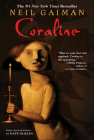
First, Neil Gaiman's 2002 masterpiece "Coraline". Great movie.  Better book.

If you've seen the movie, you know the premise. Coraline and her parents move into an old house they jointly own with a couple of elderly sisters who were once famous actresses. Coraline finds a hidden door, crawls through it, and finds herself in a world mirroring her own in many ways, with her "other parents", similar neighbors, similar woods adjacent to the property, and the same haughty black cat - well, that cat can talk. Coraline soon realizes that there's a sinister undercurrent underneath it all.

The movie was reasonably faithful to the book, more so than most adaptations are. But, like most adaptations, it fell short. For starters, the book has Neil Gaiman's splendid, masterful writing. His descriptions plant you firmly in the worlds he creates; his protagonists are immensely likeable and his antagonists immensely... creepy. The other world Coraline enters promises her the attention she is missing from her sometimes distracted parents. Coraline sees through the ruse in practically no time, and would simply return to her own world and simply be content, but the evil on the other side wants her. And her parents. And her neighbors.

Coraline isn't going to let that happen. How she stops it (with the help of the cat) makes for a more suspenseful, and ultimately more satisfying journey, than the movie.

~~~

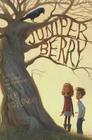
Next, M.P. Kozlowsky's 2011 debut, "Juniper Berry", aptly subtitled "A tale of terror and temptation."

Eleven year old Juniper Berry has a dream life - or at least she used to. Her parents are famous movie stars and she lives in a huge house. She writes plays that she and her parents perform together, and they are tremendously happy together. Or at least that's the way it used to be. She still writes the plays, but since becoming famous, her parents have grown increasingly distant and no longer have time for her. At times they are downright cold.

Juniper finds a friend in her neighbor Giles, a lonely boy whose parents have also grown distant and cold. Together they find a secret world underneath a gnarled old tree, and there they discover the horrifying reason why they are losing their parents. There they meet the sinister Skeksyl, who promises them their dreams - for a price. And he makes very convincing arguments the price is well worth the realization of their dreams. The most chilling aspect of this story, for me, was how convincing Skeksyl was - which makes this a cautionary tale for adults as well as for children.

Children, of course, are less gullible than adults, and so they save the day, but not before a few quite suspenseful moments. A final word of caution I give: you'll never again look at toy balloons in quite the same way.

~~~

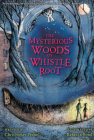
More lighthearted and less spooky is another debut novel, Christopher Pennell's "The Mysterious Woods of Whistle Root". Booklist offers it up as being "in the vein of E.B. White", and after reading it, I realize the last time I read either "Charlotte's Web" or "Stuart Little" , I was a child, which has probably been far too long considering I still remember the story lines if not the details, and still remember being enchanted by them.

Carly Bean Bitters has never been able to sleep at night, and her parents and multiple doctors never could figure out why. She's now an orphan being raised by her aunt who takes care of her temporal needs but largely ignores her. Her teachers don't understand her and have little patience with her falling asleep every day (she has no difficulty whatsoever sleeping during the day.) And she has no friends. Spending her evenings alone reading and drinking hot tea, she often hears music being played, but can never see who is playing it, nor who is leaving vegetables on the rooftops of the town of Whistle Root.

One moonlit night a rat with a violin asks her if she can play the horn. Carly learns that it is the rats playing the music and leaving the vegetables behind as the owls, who used to dance to their music, suddenly start snatching away the rat musicians one by one. Soon her rat, Lewis, is the only musician left. With Lewis, and an unexpected friend in her schoolmate Green, she learns the history of the town of Whistle Root, the history of the Whistle Root trees (so named for their uniquely shaped roots which can produce a shrill whistle), and the dark creature responsible for the change of behavior in the owls and the disappearance of the trees. And some surprising things about her own history.

~~~

All three are fairly quick reads yet enjoyable enough to be rereads.


Tuesday, July 28, 2015

Atticus's Halo

In the recently released Go Set a Watchman, Jean Louise's uncle Jack tells her,

"As sure as time, history is repeating itself, and as sure as man is man, history is the last place he'll look for lessons." 

Uncle Jack was referring to then-current events in recalling the events from Scout's childhood. He could have been referring to current events in our day. He could have been referring to the reaction many bloggers and reviewers have had over the book. Even those who have not read it have likely heard of or read how our image of Atticus Finch (who, however ideal he may be, is still a fictional character) has been forever altered and how no one will ever be able to reread To Kill a Mockingbird with the same enjoyment (if at all). Much is made of Atticus's surprising racism and how this sequel is so inconsistent with the original story.

For those who haven't already heard, Go Set a Watchman is the original story, the first draft of the novel which was reworked at Harper Lee's publisher's request, reworked to the point of essentially being rewritten as To Kill a Mockingbird, which has grown so beloved that it is understandable that anyone not knowing this (and quite a few who do know it) would be upset at the surprising things Atticus says to the grown-up Scout. So, to anyone who is apprehensive about reading the book because of the opinions of complete strangers on the internet, I offer a bit of advice to make it more palatable: don't read it as a sequel, but rather a separate story connect only by similarly named characters and places. Because it really is its own story, examining the issue of race from a quite different perspective.

That is not to say there aren't things comfortable and recognizable. The grown-up Scout might prefer to be called by her given name Jean Louise, but she hasn't changed much. She's still a fighter, but more likely to use her mind and words now rather than her fists as she did as a child. She has a sense of moral right and wrong which was instilled in her by her father and Uncle Jack and her housekeeper Calpurnia, and those beliefs have been refined by living her first few adult years in New York. So when she learns "the truth" about her father, her revered hero, she is understandably upset.

It is apparent from the first chapter that Jean Louise is struggling to understand her place in the world, and uncertain of her current beliefs, let alone those beliefs she held in childhood. She is returning to her childhood home for a regular visit, but she has no desire to stay. The novel's first shocking revelation is that her brother Jem has passed away a few year's prior to the novel's beginning. Some reviewers have stated that his death  doesn't seem to have affected her much. I disagree, it has affected her profoundly, but the story is about Jean Louise coming to terms with herself, and flashbacks show how much Jem's death hurt her and shaped her. She is met at the train station by her boyfriend Henry, a childhood friend who now is part of her father Atticus's law practice. In that same first chapter we get the impression that she's not as committed to this relationship as he is.

The first third of the novel has Jean Louise still struggling to get along with her Aunt Alexandra (whose character is also much unchanged), including her aunt still trying to turn her into a proper young lady, coming more to terms with her father's crippling arthritis, seeing her childhood home replaced by an ice cream shop, and visiting classmates she feels she has nothing in common with. Through all this she's simply trying to figure out what she wants in life, what she truly values, and whether or not she wants to marry Henry.

All this happens before the startling events which have created so much undeserved controversy. Jean Louise goes to the courthouse and sits in what was in her childhood the "colored balcony" and listens to her father - or rather, listens to the words of a very bigoted man while her father says nothing, and is made guilty by association not just to Jean Louise but to many of the reviewers who apparently stopped reading the book at that point. I'm not going to list the things she hears that evening, or the things she is told by Atticus when she angrily confronts him later. Those crimes have been listed by many others. I will instead merely say that every single one of those things certain reviewers have pointed out are taken out of context. I do not say this to justify any of those things; ugly is ugly. But in our zero tolerance, politically correct society, words like "bigot" and "racist" have been used and overused and misused to the point where nearly all of the true meanings have been lost. The things which Atticus says to his daughter are neither surprising for the time period, for the place, and certainly not when taken in context with the rest of the novel. Jean Louise shows herself to be as unyielding and prejudiced - albeit in different ways - as Atticus and Henry and all the others she wants to completely write off and disown in her hotheaded 26-year-old self trying to figure out life.

Whether one reads Go Set a Watchman as the sequel it's marketed as (which it isn't) or the rough draft of To Kill a Mockingbird (which is no where near as rough as many reviewers have stated), if it is to be read at all, it needs to be read fully, not thumbed through to zero in on the shocking bits, not via politically correct sound bytes. A friend commented to me that most people remember the Atticus Finch from the movie, not the Atticus Finch in the book, who is a more realistic hero for his rough edges. From the movie, Atticus's halo seems as near straight as a halo can get. Having read To Kill a Mockingbird many times, I found his halo tilting slightly a couple of reads ago. For me, the cultural icon has not been destroyed any more than my real life heroes have been destroyed when I found things in them I found surprising or disheartening. People are complex; they are not perfect. Atticus is in both books a loving father, a good man trying to see society clearly and fairly and a man wanting to set a better example than he knows he's set himself, to set himself a watchman.

Like To Kill a Mockingbird, Go Set a Watchman is about race relations in the South - but neither book is solely about race. Both novels are about growing up. Both show a still loveable Scout (the child being more loveable than the adult) trying to understand the world around her, trying to do the right thing, trying to be a better person than who she was before. No one should object to that.


Sunday, February 15, 2015

2014 Reads: Mysteries

When I wrote my last post, I intended to do a series of sorts and eventually write about all the books I completed in 2014. And then, life got in the way, and I allowed it to. To my credit, however, I have been reading more this year than last. Another reason to set aside more time to actually write about the things I love, such as books and food, which is why I started this blog in the first place.

Almost half of the books I read last year are mysteries. Some were rereads, some were favorite authors, some were authors new to me. Twelve books is a lot to review in one blog post, so I will do none of these proper justice, but there wasn't a dud in the lot. I would recommend any and all of them.

They are, in the order I read them:

The Pyramid, and Four Other Kurt Wallender Mysteries by Henning Mankell

Epitaph for a Spy, by Eric Ambler

The Black Hand, by Will Thomas

Cop Hater, by Ed McBain

Spider Woman's Daughter, by Anne Hillerman

G is for Gumshoe, by Sue Grafton

Friday the Rabbi Slept Late, by Harry Kemelman

Night Fall, by Joan Aiken

Jerusalem Inn, by Martha Grimes

Fatal Enquiry, by Will Thomas

Silence of the Grave, by Arnaldur Indriđason 
A New York Christmas, by Anne Perry

My thoughts, in order that I am having them today:

~~~~~~

Last year I began reading Scandinavian mysteries. I'd be interested in knowing if all detectives in Scandinavian literature are as downtrodden and morose as Henning Mankell's Kurt Wallender, and Arnaldur Indriđason's Erlendur Sveinsson and Maj Sjöwall and Per Wahlöö's Martin Beck? I'd like to know, for as much as I have enjoyed these books, sometimes I'd like to close a book with a sign of relief because the bad guy has been caught, rather than closing the book with a sigh of relief because the character (and reader!) has an emotional reprieve, at least until the next in the series.

In Silence of the Grave, Detective Erlendur and his team are called in to investigate a skeleton found at a construction site for a new housing development. The skeleton is determined to be close to seventy years old, and the novel soon begins shifting back and forth between the two time periods. On the one hand, there is the story of the degradation of a family due to domestic violence which is difficult to read not because of its savagery but rather because of its casualness on the part of the abuser. Even so, the author manages to elicit just a little just a little sympathy for the devil by alluding to the abuser's own abused past. Just a little. For the most part, the characters are well enough drawn that it's not difficult to hate one very vile being. Present day, the detectives try to solve a very cold case (I am not making a pun here with the story taking place in Iceland) while Erlendur is fighting his own ghosts of the past. The investigators are still at the crime scene when he receives a phone call from his daughter, whom he has not seen nor heard from in months. "Help me. Please." is all she says before the line goes dead. With the caller I.D. saying "unknown", he really has no place to start, but by searching frantically in the early morning hours, he manages to find her, unconscious and bleeding. The majority of the investigation then falls to his team, as he spends much of his time at the hospital talking to his comatose daughter. Here the reader learns more of Erlendur, and what makes him tick, including a tragedy from his childhood. One of the things I like about the Erlendur novels is how he perseveres; despite the harsh realities of his own life, he gets up every morning, he returns love for the hatred his children and ex-wife often thrust at him, and (with the help of his team, fleshed out more here than in the previous novel Jar City) catches the bad guys.

The Pyramid is the first book about  Swedish detective  Kurt Wallender that I've read, although I had seen TV movie production with the character portrayed by different actors. Here is a collection of short stories and novellas written after the main body of the series but taking place in the detective's life twenty plus years prior, from a young beat cop, moving forward through twenty years to the time just before the start of the series. he mysteries themselves are good stories. It's an excellent character study and I plan to read others ion the series. It became a tough read towards the end, because unlike the Beck and Wallender stories I began with last year, I actually saw him fall in love, get married and have children, and slowly lose it all, plus the increasing estrangement with his own father. Being put through the wringer makes for compelling stories, but not for easy reads.

~~~~~~

When I learned that Will Thomas's Fatal Enquiry was soon to be published, a did a happy dance. Six years since The Black Hand had been published, and I'd missed Cyrus Barker and his assistant Thomas Llewelyn. And I realized that although The Black Hand had been in my bookcase for awhile, I'd somehow missed reading it, an oversight I immediately rectified. The books have been compared, both favorable and unfavorably, to the tales of Sherlock Holmes. There are certainly similarities, both to Sir Arthur Conan Doyle's book version of the character and Robert Downey Jr's movie version. As different as those two are, so is Cyrus Barker to Sherlock Holmes.  Fatal Enquiry is probably the closest to be considered Holmesian, but even then, more in the comparison of Holme's Moriarty to Barker's nemesis Sebastian Nightwine.

Previous books have had private enquiry agent Barker and his assistant Thomas dealing with racial hatred, obscure and deadly martial arts, white slavers, and political terrorists. The Black Hand deals the mafia; Fatal Enquiry has them dealing with deadly poisonings and Barker framed for those murders and in hiding for most of the novel while Thomas does most of the leg work, which allows Thomas to shine and prove his worth not only to Barker, who believed in the downtrodden young man all along, but for Thomas himself. Some reviewers have stated they didn't think this latest offering had much character development. I disagree; it is subtle but present, and the end of the novel provides a good starting point for more of that development as Thomas is given full trust and becomes more a partner than before.

~~~~~~

Spider Woman's Daughter has Anne Hillerman taking over her late father's series. She makes the characters her own without detracting from all Tony Hillerman had established. When she tries to mimic her father's styles, she's not entirely successful, but when she writes in her own voice, she tells as good a story as her father did.

Navajo Nation police officer Bernie Manuelito sees retired lieutenant Joe Leaphorn shot in the parking lot of the diner where she and her husband Jim Chee have just has breakfast with their former mentor. She gets to the fallen Leaphorn too late to apprehend, or even get a clear look at, the assailant, but manages to keep him awake and coherent long enough for the ambulance to arrive. As usual, the FBI is less than cooperative with the Navajo police. While Leaphorn's life lies in the balance, Leaphorn's wife cannot be found, and Bernie has been told she's too close to the case to investigate effectively (she investigates anyway), evidence comes to light that clues might be found in one of Leaphorn's and Chee's old cases.To say which one might be a spoiler.

~~~~~~

Eric Ambler is a new author to me, one I'd not even heard of until I stumbled upon a reference to Epitaph for a Spy, and I said, Hmmmm, sounds intriguing. And I found a copy. There is plenty of intrigue here. Shortly before World War II, Josef Vadassay is at the end of a Riviera holiday when he picks up a roll of film he has dropped off. But the pictures aren't his, he learns when the police subsequently pick him up, and he is accused of being a spy. To avoid permanent arrest (there was a slight problem with his passport....) he is manipulated into investigating the hotel's other guests -- something he's ill-equipped to do, but is given no other choice. Preferring not to get to know the others, now he must make friends with a young American brother and sister, expatriate Brits, and a kind German gentleman who is not who he says he is (nor necessarily who Josef learns he is, either). Josef cannot trust anyone, even those who claim they believe him and want to help him. It's the type of story Alfred Hitchcock would have loved, although as far as I know never looked at. And it's the type of story that makes me want to look into more of Eric Ambler's work.


~~~~~~

A couple years ago, during one of my parents' declutterings, they gave me a box of Harry Kemelman's  Rabbi Small mysteries. Which looked interesting enough to accept and place in one of my mystery bookcases. Where they sat until rediscovered in one of my too-rare browsings of my own bookcases. It is in Friday the Rabbi Slept Late that we are introduced to Rabbi Small and the New England community of Barnard's Crossing. He's the still-new rabbi in this small community, and not everyone is pleased with his intelligence, independence, unflinching honesty, and even the way he dresses, and a small but vocal faction of that community wants him replaced. It certainly doesn't help when the body of a young girl is found strangled on the Temple grounds, and the rabbi cannot provide a believable alibi. Catholic Chief of police Hugh Lanigan believes the rabbi innocent, but must look at the evidence, which points to the man he has been developing a friendship with over theological discussions, which alone are worth reading the book for.

The Rabbi Small books are not currently in print, but affordable used copies are available online, and Audible.com has an audiobook available.

~~~~~~

Good books should not go out of print. They simply should not. They should be available, at the very least, as Print-on-Demand, as books by unknown authors are.Where is the justice that books such as Joan Aiken's 1969 gem, Night Fall, cannot be found newly printed, nor in audio, nor in e-book format? Fortunately I have the paperback copy I bought at the now defunct Hatch's Books back in 1988. I've taken mailing tape to reinforce the binding, and the pages are a little yellowed, but last year's reading was every bit as enjoyable as the (at least) three tiems I read it before that, the first time being a library copy when I was still in high school.

Meg is nine when her mother and stepfather are killed in a car accident and she is sent to live with the father she barely knew. Her father is distant but provides well for her; she makes friends with the kids next door and grows up, excelling in art, and gets engaged. But she doesn't have peace: when she is nineteen, a recurring nightmare from her childhood has increased in frequency and intensity: she finds herself falling and landing in pain, and then a ghastly face moves back in the darkness in front of her.against the wishes of her father and fiancé she returns to the seaside village in Cornwall where she had fallen off a cliff and broken her leg as a four-year-old child. She is convinced something happened with that accident that is the cause of her nightmares. She meets a man who wants to help her unravel the mystery, but there is someone else who doesn't want her digging into the past of fifteen years ago, when an unsolved murder was committed....

~~~~~~

Rounding out my mystery reads of last year are authors I've read at least one other book from:

Ed McBain's Cop Hater - I read one or two of the 87th Precinct tales back in high school, but cannot say which ones. This is the first, introducing the characters. Three detectives from the 87th Precinct are killed within days of each other, and Detective Steve Carella's investigation, and a careless journalist, makes him and his deaf girlfriend Teddy targets as well.


Sue Grafton's G is for Gumshoe - I've read a handful of these, not in order. Even though the character of private detective Kinsey Millhone ages and occasionally references previous cases, the books stand well alone and independent of one another and therefore do not need to be read in order. In this one Kinsey learns that someone she has put behind bars has put out a contract on her and after he very nearly succeeds she hires a bodyguard. This makes it difficult to continue with another investigation where she has been hired to find her client's mother, who dies under suspicious circumstances shortly after Kinsey succeeds.

Martha Grimes's Jerusalem Inn, by Martha Grimes - These too do not need to be read in order, but it might help especially with the later ones. Each of the Richard Jury mysteries is named after an English pub, and sometimes a part of the story line takes place there. In this, the fifth novel in the series, Jury makes the acquaintance of a beautiful woman in a graveyard. They have a nice conversation over drinks and he is looking forward to seeing her again. But when he does, she is dead, and Jury doesn't buy the official verdict of suicide. Meanwhile, his best friend Melrose Plant, snowbound in a mansion with friends, stumbles across the body of another beautiful woman. When Jury's own investigation leads him to that mansion, it begins to look like the two murders are connected, and that one of the victims might not have been the intended victim after all.

Anne Perry's A New York Christmas - Anne Perry releases a shorter mystery every Christmastime, taking a member of the supporting cast from one of her two Victorian series and embroiling them in their own intrigue during the holiday season. 2014's offering has the now grown daughter of Inspector Thomas Pitt, Jemima, as traveling companion to Delphina, a young woman engaged to a New York aristocrat. The brother of the groom asks Jemima's help in locating Delphina's mother who had abandoned her as a child, and who he believes is back in New York and will create a scandal. Jemima finds Maria, dead, and is subsequently charged with her murder. Only a young police officer believes in her innocence, and that belief might not be enough to save her, unless working together they can solve the real mystery behind Maria's original disappearance and who truly committed the murder of the woman in her flat.

~~~~~~


Saturday, December 27, 2014

2014 Reads: Nonfiction

Of the twenty three books I completed reading in 2014, three were nonfiction. That is well above average for me, as most the nonfiction I read is magazine or newspaper articles. I seldom complete reading nonfiction books, although I will pick them up and browse, reading a paragraph here and occasionally a full chapter. But it was a year of reflection for me, and those books I completed were ones which made me think and reflect on life and friendship.

I started reading Change Your Brain, Change Your Life by Daniel G Amen four years ago on the recommendation of my bishop, and finally finished it early this year. Did it "change my life"? Well, not by itself. But it did encourage me to look at things differently than I had, and helped me to understand things in ways I hadn't understood them before. It is a book about brain chemistry, how the different aspects of the brain should work and how they actually do, when not being adversely altered by physical trauma, injury, poor nutrition, abuse, or either substance or behavioral addictions. For the most part, it is written for the layman, only occasionally growing too clinical. Dr. Amen begins the book by describing the different systems of the brain: the limbic system, the basal ganglia, the prefrontal cortex, the cingulate system, the temporal lobes, what they do, and what happens to you when any of those systems are over or under stimulated. Sometimes these systems overlap, so it could be one or more system out of whack causing a particular problem of anxiety, anger, depression, or destructive thought patterns or behaviors. Case studies of his patients are used as examples, and "prescriptions" are given: medicinal, nutritional, and thought exercises, to help heal your self, as well as when to seek professional help. It all makes for an interesting read. The major premise is this: You are not stuck with the brain you were born with, nor are you stuck with the brain you have been given through injury or abuse or addiction. It is, for the most part, a positive message: that you are in charge, no matter how difficult it seems, and you can change.

Madeleine L'Engle has long been one of my favorite fiction authors, and had read excerpts from a number of her books on religion and her Crosswicks journals, but had never read one cover to cover. This spring I picked up The Rock That Is Higher: Story As Truth. She wrote the book following a car accident in 1991, and she talks about the power of story in our lives. Using examples of well known literature, examples from her own works, and many examples from the scriptures, she illustrates how story shapes and affects our lives, how it shapes, molds, transforms our lives. She talks about how stories are true even if not necessarily factual. I loved this book. I loved it for its discussion of religious and spiritual  principles, although I did not always agree with her conclusions. And I loved it for something I saw in the narrative, which I did not see mentioned in any of the reviews I read of the book after reading the book itself: it was, for me, an examination of the creative process. And for that reason I would recommend it to any writer or artist, singer, painter - anyone wanting to give their creative juices a few extra volts.


A Grief Observed was written by C. S. Lewis following the death of his wife, when he had a severe crisis of faith and experienced crushing doubt about everything he held dear. It is a short book, a mere 76 pages in the edition I read, but it packs a powerful punch. Being originally a journal not intended for publication (only years later did he decide the reflections he made during his journey might help others), there is no sugar coating in his thoughts. At times he rails against God, and that might make some readers uncomfortable. We are taught, if not from the pulpit then at least by friends, family and even society, not to doubt our faith, not to question it. But question he did, decry it he did, lambaste it he did. And then, honestly examine it he did, recognizing how his previous faith had been, in his own words, a house of cards. I had half-read it years earlier, a quick perusal before turning it over to a friend who had lost a loved one. I picked it up this year, reasoning that there are other things we grieve over than the death of loved ones, and hoping it would bring me some measure of peace. It did just that. It brought me a great deal of peace and comfort, and although I was not looking for it (or I might chickened out and not read it), brought me to an examination of my own faith, which I hadn't realized I was beginning to doubt. And it earned a spot on my "favorites" bookshelf, something which doesn't often happen with nonfiction.


Thursday, May 1, 2014

Snacks in the Mail!

There are three things I really really enjoy getting in the mail. They are, not necessarily in order of importance, letters from loved ones, books, and... food. Online grocers, fresh fruit straight from the groves, and snacky items.

Last summer I stumbled upon Nature Box. For twenty bucks a month I could get five "full sized" nutritious snacks delivered to me, and the first box was half price. I spend that much or more every month on munchies anyway so I thought I could give it a try. The day after I signed up I started getting Facebook invites and friends telling me in person about it. One could almost think it a conspiracy, that these guys are suddenly everywhere.

At five in a box for twenty dollars, unless math has changed recently, that's four dollars a bag. The quality of the snacks is what you would find buying snacks at Sprouts Market or Whole Foods. There are no trans-fats nor high fructose corn sweetener. Many are vegan friendly. Some are good but not four dollar good. Others are well worth the price. Whole grain fig bars, chia crackers, nut and fruit mixes, etc. I was considering dropping the service; the snacks were different every month but I didn't get to chose and so I received a few snacks that I didn't care for. None were bad, but some were not worth the price even considering the wholesome ingredients. But last month they made a great change: you can log on to your account and make substitutions for snacks you prefer. Naturally I chose more chocolate.

Recently I did a web search for other monthly snack deliveries. Nature Box has got their marketing down pat, but they are not the only ones on the block. For the most part, the prices are the same, twenty dollars and up a month.  There are some which deliver your ordinary every day junk foods, but unless you were merely trying to limit yourself to what comes in that monthly box, I don't think this is a better deal than plugging money into the office vending machine every day. Plus, the YouTube videos showing people unpacking their first box didn't encourage me: the boxes were filled with junk foods which are popular in some circles, but not appealing to me. Myself, I will stick with the nutritious snacks: there are plenty to chose from. One could easily go broke trying them all.

So I selected just a few to try. If twenty a month is outside your budget or if you don't get the munchies every day (I find that hard to relate to!) there are two offering smaller packages for as little as six dollars a month, with the option of deliveries monthly, every other week, or weekly. Do the math and you see some clever marketing: weekly delivery comes to twenty four dollars a month for smaller snacks, so in that regard Nature Box is the better deal. Graze and Nibblr each deliver four "portion controlled" snacks of nuts, dried fruit, whole grain crackers and the like. The portions are about the size of a vending machine snack, so at six dollars a delivery, about the same cost as four trips to the vending machine, maybe a little more (but after all, delivered to you!) I found the snacks in each -- arranged in four trays inside a box slender enough to fit most mailboxes -- tasty and of higher quality than standard vending machine munchies. Of the two I've preferred the Graze snacks, especially the clever combinations such as "Key Lime Pie" (sponge cake pieces, lime infused raisins and dried meringue pieces). On the other hand, you have to go to their website for full ingredients lists  (why, I don't know) while the Nibblr snacks have them on the package label. A trip to the health food store's bulk foods section would be far more economical, if less convenient, but these are fun to try. I could see these as a fun gift, and they offer gift subscriptions. Who doesn't like opening their mail box and finding a box of food from a friend?

There are many other subscription boxes I've yet to try. There are junk food options, international candy options, gluten free and paleo diet - you name it, it's probably out there, and if it's not there are websites with instructions on how to start your own company. There are monthly clubs (most of which require a three month commitment at $50 to $100 a month) for artisan cheeses, chocolates and bacon. Bacon of the month club! I kid you not. But I think it will be a while before I try that. While I love the idea, I'm only one person, and that's a lot of cabbage for some cheddar, a lot of bread for some bacon, a lot of smackers for a few snackers. Now stop groaning at my puns and go check them out.


Tuesday, March 18, 2014

Free Will and Dystopia

Although it seems pretty obvious to me now, I realized last week for what I think was the first time that a common theme in dystopian literature, especially young adult dystopian literature, is the principle of agency, or free will. Someone, usually the government, hinders the basic right to choose for one's self, sometimes masking the restrictions under the guise of a greater freedom. But personal agency is still hindered and the novel's protagonists come to realize that their society isn't as well ordered, kind or ideal as they've grown up believing. And our protagonists become reluctant heroes in the overthrow of their oppressive regimes, or at least in waking people up to the fact that things aren't so grand.

Wikipedia hosts a no-doubt incomplete list of dystopian literature by decade from the 18th century forward. Does it say something about our current society that there are listed a dozen novels in the entire nineteenth century, and every decade since the 1930s had at least that many per decade? That in the first decade of the twenty-first century there were over four dozen dystopian novels published? Or that in our current decade there are nearly three dozen so far (and we're not halfway through)? Or -- perhaps the biggest concern of all -- that in this century the vast majority of those bleak futuristic societies were written for teens and preteens? Why the increase? Is it just a fad? A look though Amazon.com will yield a far greater number of these tales than the Wikipedia list, if one counts all the free or dollar priced ebooks. Still, the numbers are increasing so I don't think this trend can be written off as merely a fad.

Last year I read a couple of different articles pondering the question of how much violence is too much violence in young adult literature - and the movies which eventually are spawned by these books. It's not exactly a new question. I grew up on Saturday morning cartoons and I remember hearing that debate as a child. No matter how many Road Runner cartoons I watched I never had the desire to drop an anvil on some poor bird's head, and although I might have sometimes wished to bop the noggins of various bad guys, I knew Batman and Superman never bopped anyone who didn't deserve it, and they didn't continue hitting once the bad guy started seeing stars.

There's no doubt the violence of The Hunger Games is extreme and no one seriously claims that children killing children is not, at the very least, unsettling. Is it "right" to write about such things for children? Do these types of stories increase aggression and desensitize our youth to the value of human life? I don't think such questions have simple yes-or-no answers. Nor do I think it is easy to say how much art imitates life or life imitates art. We live in a violent world, and we always have. These stories aren't simply visions of horrific futures, either the blatantly obvious horrors or the thinly disguised "more enlightened" societies they pretend to be. One of the characteristics of dystopian literature is social commentary on the time in which is is written. That thought truly makes me wonder about the plethora of these tales; have we become so cynical we can only see the bad in our society and imagine all the ways it can get worse? Or are we becoming more aware than ever before, and more willing to discuss the ills which we see?

One of the reasons I enjoy young adult fiction more than most adult fiction is the honesty with which it is written. Another reason is the hope with which it is written. Perhaps I've read the wrong books - but of those I've read, the characters in "adult" dystopian novels end up giving up -- and society is no better at the end of the tale than at the beginning. I don't need sunshine and lollipops in the books I read, but if I read a murder mystery, I expect the killer to have been caught and brought to justice when I close the book. And I expect there to be at least a glimmer of hope for the future when I close the book of a dystopian novel, even the first part of a trilogy, such as Suzanne Collins's The Hunger Games trilogy or Veronica Roth's Divergent trilogy. 1984 and Brave New World ended as bleakly as they began, with the adults protagonists losing their battle with their oppressive societies (and in the case of 1984, being happy about it.) Oh, Fahrenheit 451 and The Time Machine ended on the upbeat, but those are it for the adult fiction I've read in that genre. (I'll happily take any suggestions.) What I like about the bleak fiction of the young adult market is simply it's not so bleak. Despite the violence, despite the visions of society gone wrong, there is reason to hope that things are going to get better -- because the heroes in these tales -- kids -- don't capitulate like their adult counterparts do.

The world Veronica Roth draws in her Divergent series, is, as many dystopias, the post-apocalyptic result of possibly well-intentioned attempts to rebuild society after we screwed it up. Humans being as they are, they still didn't get it right. A hundred years after a war, the city of Chicago is fenced off from the rest of the world -- it's unclear how much of a world there is outside of Chicago (perhaps that is shown more in the sequels; I do not know and have resisted researching too much in case I wish to someday read those sequels). The society is divided into five "factions" -- which I saw as mini societies within the larger society -- and each of these factions is structured to think and perform according to set patterns based upon the virtues they define themselves by. At age sixteen an aptitude tests is administered to determine where each individual is best suited to remain for the rest of their lives. Regardless of the aptitude test results, people are -- supposedly -- free to choose their new faction or remain in the one they were born into. But once the choice is made, you're stuck with it, unless you fail the tests given by your new faction, and are cast out into the "Factionless", i.e., dregs of society, the grunts, the poor, the unwanted. Free will only goes so far in this society.

The five factions are Abnegation, or the Selfless, to which Tris and her brother are born into but both turn away from on Choosing Day; Amity, the Peaceful; Candor, the Honest; Erudite, the Intelligent; and Dauntless, the Brave. Tris joins the Dauntless, who originally were intended to be society's protectors, but they've grown cruel under current leadership. Her brother joins the Erudite, whose seeking of knowledge has turned them arrogant and power hungry under their current leadership. It shouldn't be a plot spoiler (and I apologize if it is) that Tris falls in love with her instructor, a boy only two years older than she, who sees the flaws in not only his own faction but in the others, and dreams of a greater unity. He also discerns Tris's secret, and he's not the only one to do so. Tris's aptitude test reveals she is Divergent, which means that she has a greater capacity to exercise free will than most people do. And the government doesn't like that.

Divergent is, for the most part, a believable society, although I do wonder what's outside of Chicago and wonder if I need to read the next two books to find out. And some of the dialog I found was too present-day and did not gel with how I believe this society would think and speak. Nothing major, but those bits were still a distraction. Taken as a whole, I can believe a society set up with the intention of the betterment of all by separating people into their factions according to there inherent gifts and dispositions. But human beings are creatures of free will and taking that away is going to cause problems, and I think the author develops those problems at a believable pace and with flawed characters the reader can grow to love and villains the reader doesn't feel necessarily guilty for hating.

The violence in the worlds of both the Hunger Games and Divergent is about equal, portrayed differently and for different purposes, but about equal. Whether it is too much for either the adult or the teen reader is a great deal up to the reader's tolerance for violence and acceptance of how it tells the story. As I've said, dystopias are part social commentary. I don't think we should sell short today's youth; they see real life violence around them every day and like us adults, often feel powerless to do anything about it. And one more thing I like about young adult dystopian fiction: the protagonists understand their choices have consequences, and they learn and grow by making those choices, both good and bad. And maybe the readers of these tales can take those lessons their fictional heroes learned and apply them to real life situations -- and possibly prevent these dystopias from becoming reality.


 Divergent 


 The Hunger Games 

Wednesday, February 5, 2014

The Long Winter -and- The Long Winter

Winter is here. The air is gelid, the wind is brumal.  I have a good coat, hat, gloves, scarf and boots which protect me from the worst of the weather as I commute to work via public transportation, which requires a great deal of walking and waiting in single digit and subzero temperatures and a couple of days with wind chill thrown in just for kicks. Protected from the elements or not, I don't much care for winter, even the mild ones Colorado typically has. After a fairly mild, if wetter than usual December, January turned cold, warmed a little toward the end, and then February came in determined to show January a thing or too. In my memory, February is generally colder anyway, March and April wetter. I know the routine. But I still don't like it.

I don't mind reading about it, however. Last year, when it was supposed to be springtime, we had one snow after another. They weren't horrendous snows. Just one after another, and springtime didn't seem interested in making an appearance. And I was probably more acutely aware of it because I had picked up Laura Ingalls Wilder's 1940 novel The Long Winter. Wilder herself admitted the novels based upon her childhood were historical fiction, and in the interest of storytelling, she combined characters and moved events around. The Long Winter, however, is considered by historians and biographers to be less fiction than her other books, with only a couple exceptions, one of which being the duration and frequency of the storms described in the book.

Laura is 14 in the fall of 1880 and winter arrives early to the town of De Smet, Dakota Territory. There were a higher than usual number of blizzards that season and winter lasted through April 1881. Wilder describes the events of that winter through the eyes of a fourteen year old and the relentless winter becomes as much a character in the tale as she herself, her family and the townspeople. Some storms lasted for days, snow went up to rooflines, cattle froze to death standing in the field. Fuel and food became scarce when trains couldn't get in to town. Laura and friends get lost in a blinding blizzard and would have walked out of Main Street unto the open prairie and perished had Laura not bumped into the last building. Pa and other men from town travel a great distance in an unsuccessful attempt to dig out a train, and the railroad eventual shuts down all trains. Later, when already meager food supplies have run so scarce many of the townspeople would probably starve, Almonzo Wilder, whom Laura would grow up to marry, and his friend Cap Garland set out inbetween blizzards in search of a store of wheat rumored to be an arduous twenty mile journey across a landscape blanketed with snow obscuring familiar landmarks and hiding deep holes and other dangers.

Snow, cold, dark, hunger, worry -- but the survival story is more than the family's will to survive; it is the family's will to do so in a happy, cheerful manner; encouraging and lifting up one another, telling stories, making a meager Christmas the best it could be. The "Long Winter", or the "Snow Winter" as it is called in some historical accounts, did happen, and whatever liberties Wilder may have taken with its duration and intensity (and the local and oral history doesn't agree, so perhaps Wilder's memories are the truer account after all) -- the story itself is a satisfying yarn, best read from inside a comfortable abode with modern amenities, and perhaps large mugs of hot cocoa, with gratitude for global warming.

John Christopher wrote a very different novel in 1962, entitled The Long Winter (US title; The World In Winter in the UK). Christopher's novel is part post-apocalyptic, part political satire. Set in an unspecified future, a natural event in the decline of solar radiation brings a new ice age to earth. The winter grows harsher, food becomes scarce, economies go south. And people migrate south to more temperate climates, specifically Nigeria. And here the long winter takes second place to real story: society's mores being turned on their heads. As Europeans flee south into Africa, Black becomes the dominate, majority race, and White becomes the oppressed, the minority. I think the tale works better in world of 1962 in the middle of the Civil Rights Movement, but there is still much food for thought for today. Our attitudes towards others, whether based upon race, religion, economics or whatnot - could change in an instant, given a different set of circumstances.

Christopher, perhaps better known for his children's book series The Tripods, wrote disaster novels for all ages. Although most of his adult novels are now dated, I think it would be nice to see them back in print, for with that dating comes historical significance. I read the Tripods (set centuries after Earth's inhabitants have been enslaved by alien entities) books 35 years ago, along with Empty World (a plague causes rapid aging and death and nearly decimates the Earth's population) and then about ten years ago, No Blade of Grass (a plant disease kills off wheat, corn and other edible grass-like grains). Although The Long Winter was written for adults, when I read it five years ago at the height of widespread discussions about global warming, it brought back my childhood: I grew up in an era where the scare wasn't rapidly rising temperatures and melting polar ice caps, but rather the fact that we were long overdue for the next ice age. It was in this context I read John Christopher's The Long Winter; the political commentary didn't really register until I was nearly finished reading. Overall, though, Christopher spins a good yarn. His characters are flawed individuals, and to this reader, not particularly likeable in some of the decisions they make. The ugly side of humanity comes out quickly when disaster strikes, and it comes out in a matter-of-fact way, as if circumstances dictate morals more than inherent beliefs. Still, his primary characters are basically good, eventually choosing the right over the self serving. And although, like all good disaster tales, the senses of gloom and despair prevail through much of the book, in the end, a glimmer of hope is present; not a neatly tied happy ending, but a hope, just as springtime is hope for new life after long winters.


Wednesday, January 15, 2014

Waste of Money?

Yesterday a friend posted on my Facebook page a picture of a wall of books with the caption "Of course anyone who truly loves books buys more of them than he or she can read in one fleeting lifetime. A good book resting unopened in its slot on a shelf, full of majestic potentiality, is the most comforting sort of intellectual wallpaper."

My friends know me well.

The post originally came from Random House Publishers, and it was interesting to read the comments about this phenomenon, mostly from people who are guilty of it. There was one person who while admitting he was probably being pragmatic believed buying books with no intention of reading them is pretentious and wasteful. Someone, not impolitely, although unnecessarily, suggested he must not be a reader, and he took exception to the assumption. I can understand why he did; however I thought it was rather assuming on his part to assume book collectors have "no intention of reading" the books we buy, and a bit pretentious to point out that everything in his home must have a purpose; just because we cannot see what that purpose is in someone else's life, doesn't mean there is no purpose present. I didn't post these observations there because such postings tend to result in flame wars and I understand his opinion even if I do not agree with it. For the same reason I am not intending to flame this stranger here, but rather wish to use the remarks as a jumping off point.

For the next few comments in that stream, a portion of them were addressed to this man, each saying in one way or another that we do indeed intend to read every book we purchase. One person wisely pointed out that we tend to think we are purchasing the time to read them along with the book itself. That struck a chord for me!

I have bought books before because I liked the author or the series and wanted the set, later discovering I only liked that particular book. I sometimes went to great trouble and expense procuring the set before I realized I no longer wanted it. Was this a "waste of money"? Perhaps, to the pragmatist it is - but then again, pragmatically, if the action helped me define my tastes and refine my collector's skills, it wasn't a waste at all, but rather pragmatic. Was it pretentious?  Well, since my intention was never to show off, I'd have to say "no", even if it appears that way to some. Some of my acquaintances have wondered why I have bought leather bound volumes of some of my favorite tomes when I already own perfectly servicable copies. Well, my favorite books I enjoy lending out, so I like multiple copies of them anyway, and, may my vegan friends forgive me, I like the feel and smell of high quality books. But any desire to show off my library isn't to show off my vast knowledge, eclectic tastes or income; it is to show people That I Have Books! And they can borrow them! The paperbacks, the hardcovers, the beat-up ones, the pristine copies (as long as they promise to be gentle); the fiction and non-fiction, adult and children's books... because... I Have Books! Books! Do you understand? BOOKS! Well, book lovers understand what I mean; book likers shake their heads in consternation.

Why do I have two bookcases filled with nothing but dictionaries? Because I like dictionaries. I like how different dictionaries define words differently over the decades. I like how they describe a word differently in the same year of publication but one defines it descriptively and another prescriptively.  No, I'm not being pretentious and trying to show how much smarter I am than everyone else. In fact the more I read, the more I learn how much I do not know. No, I haven't read every single word in every single dictionary, nor do I intended to; just the ones I am curious about at any given moment in time.

I have not read every single book I own, although I have read enough of each to know that I would like to someday, or at least I felt that way when I bought it. Perhaps when science figures out cloning so my clone can go to work for me and I can stay home and read, or when science figures out how to double or triple our life expectancies. Every now and then I glean my books and find new homes for those which I intended to read at one time but do not intend to now. Every now and then I put the book back on the shelf because it still whispers "Read Me!" And every now and then, it's a good thing that pragmatist didn't chuck that book years ago, because although I probably could retrieve a new copy of something I gave away, when the time to read something is Now! it is nice to have the book Right There. Such was the case with "The Phantom Tollbooth", which I read last year after it sat on my shelf for fifteen years, patiently waiting for me to be mature enough to comprehend it. Was it "pragmatic" to keep it there for so long? I'll answer that question with another: Would it have been pragmatic to get rid of it before I'd discovered the marvelous treasure that book is?

Some of my friends think I spend too much money on books I don't read. From a strictly financial viewpoint they might have something. They are generally the same people who don't quite understand why I spend a bit more money on premium root beer, chocolate and cheese rather than the cheapest (translate: "inferior tasting") generic stuff at the store. They cannot understand why I think it's worth the money, why I will make sacrifices elsewhere to buy what I deem the "good stuff". I cannot understand their "smart" phones when my "dumb" phone allows me to make phone calls for a fraction of the cost, nor their $150 cable bills when not having any cable TV at all allows me to buy, um, a lot of books.

So I don't think it's impractical or wasteful to spend money on books. The enjoyment I garner from books goes beyond the escape into other worlds and the procurement of knowledge. I will allow things should have a purpose, but I think it unwise and unkind to assume the value we place on things or the purpose we ascribe to them ourselves holds true for everyone. However I have found in my current decluttering that there's a definite purpose to being organized enough to know what I own and have at least a general idea where it is located so I don't continue to run into duplicate copies which I'd forgotten I had or had previously been certain I'd bought but had been unable to locate before replacing something that wasn't lost after all. Then again, duplicate copies make nice gifts, and what can be more pragmatic than that?

Speaking of pragmatism, older dictionaries defining "pragmatic" include the now-considered-archaic definitions "officious" and "meddlesome". In other words, a pragmatist is a busybody. A little bit of practical (some might say "pretentious") information I would not have known if I had decided it was impractical to keep an "old" dictionary on my shelf.

Thursday, November 28, 2013

Books I Am Thankful For

On Thanksgiving i am thankful for many things. I have a good life. I have been blessed with much. But as this is a blog about books and food.... well, at this moment, I am thankful for books and food! Specifics, you ask? Well, when it comes to food, you can pretty much stick it on a plate and place it in front of me. When it comes to reading material, stick it in front of my nose and chances are I'll give it at least a quick perusal.

I am thankful for books. I don't know how my parents instilled such a love of reading in me. Certainly they loved to read themselves. And although my siblings all learned the love of books, somehow with me they became as important as air. And still are. I have many times recommended books and authors to family and friends, coworkers and even strangers on the bus, and given them lists for themselves and for their children. The lists are always incomplete, for how do you, how can you, possibly make a list of recommended reading, even for yourself, that will ever be complete, when people's tastes change, when our own tastes change? When our political viewpoint and philosophical worldview change, sometimes returning to their roots, sometimes into new paths never before explored? What I read and enjoyed as a kid, I don't now. But on the other hand, I do. And I have recently discovered how much I missed as a kid.

So I present the following list of books - title, series, authors - that I am thankful for today; listed as they come to mind or as I glance through my bookshelves for memory jogs, and not in order of importance, because if I were to make this list tomorrow, I might think of them in a different order, but that won't make them any less important. They are books which I return to every five years or so and books I read once and might never read again but which I remember fondly when seeing them because they influenced me for good at the time I read them which may have been last year, five, ten, fifteen, twenty... whoops, starting to date myself here -- many years ago. They are books which first turned me on to a new author, even if it wasn't that author's best work or their first work or even the first in that series. They are fiction and nonfiction, mystery and fantasy and science fiction and religious and scientific; they are uplifting or silly, thought provoking or mental pablum. They are recent discoveries and recent rediscoveries. They are new and old in their publication dates; they are books which were better than the movies based upon them and books which had little to do with the movies they supposedly inspired. They are books I first read in beat up paperbacks, or leather bound hardcovers, or electronic format; they are books I purchased on a whim knowing nothing about them or books which were gifts or books borrowed from the public library or lent by a friend or assigned in a high school English class due to that long standing and somewhat sadistic program of forcing children to read books which have no relevancy in their lives and suck the joy of reading out of children's minds and hearts (but somehow an occasional good book slips through.) These are the books which occupy much  wall and floor space in every room of my home but which also occupy the corridors of my soul. The only categorization I file them under is somewhat loose themes, but sometimes those themes overlap much as my reading does, for although I have but one nose, it sniffs multiple books throughout every day.

The Bible. The Book of Mormon. Doctrine and Covenants. The Pearl of Great Price. The Screwtape Letters. Mere Christianity. Even As I Am. Infinite Atonement. Great Shall Be Your Joy. Lighten Up. Act In Doctrine. Standing For Something. Prophecy In Modern Times. The Broken Heart.

A Wrinkle In Time. A Wind At the Door. The Dark is Rising. So You Want To Be a Wizard. Deep Wizardry. Harry Potter and the Sorcerer's Stone. The Magic Thief. Peter Pan. Rose Daughter. Inkheart. Dragon Slippers. Treasure Island. Time Stops For No Mouse. Larklight. Heartlight. The Secret of Platform 13. Amulet. Escape To Witch Mountain. The Forgotten Door. The Phantom Tollbooth. Five Children and It. Breadcrumbs. Theodosia and the Serpents of Chaos. The Illyrian Adventure. The Book of Three. Taran Wanderer. Westmark. House of Stairs. 20,000 Leagues Under the Sea. Airborn. Bedknob and Broomstick. The Ordinary Princess. A Hidden Magic. Over Sea, Under Stone. Unicorns In the Rain. Coraline. Wizard's Hall. Charlie and the Chocolate Factory. Charlotte's Web. Stuart Little. The Great Brain. Mary Poppins. The Lost Island. Dragonsong. Hugo. Kidnapped.

The Outsiders. To Kill a Mockingbird. Jane Eyre. Joy in the Morning. Pride and Prejudice. It's Like This, Cat. The Penderwicks. The Penderwicks on Gardham Street. A Ring of Endless Light. Saffy's Angel. Dolphin Luck. A Christmas Carol. The Christmas Box. The Long Winter (Wilder). Shane. Old Yeller. The Devil's Arithmetic. Jacob Have I Loved. Holes. Dear Mr Henshaw. From the Mixed-Up Files Of Mrs Basil E Frankweiler. A Mustard Seed of Magic. A Door Near Here. My Side of the Mountain. It's Nothing To a Mountain. Johnny Tremain. April Morning. Speak. Dreamland. Just Listen. The Four Million. Rainbow Valley.

Invasion of the Body Snatchers. Fahrenheit 451. The Time Machine. War of the Worlds. Iron Rain. But What of Earth. Pilgrimage. Empty World. No Blade of Grass. The Long Winter (Christopher). The White Mountains. The Third Level. The Last Oasis. Uglies. The Giver. Life As We Knew it. Z For Zechariah. Whispers From the Grave. Among the Hidden. House of the Scorpion. Stonewolf. A Spell For Chameleon. The Folk Of the Fringe. Seventh Son.

The 39 Steps. The Haunted Bookshop. The Face of A Stranger. The Cater Street Hangman. The Unexpected Mrs Pollifax. Chasing Vermeer. The Arm of the Starfish. The Secret Ways. The Victoria Vanishes. Aunt Dimity's Death. Murder At the Vicarage. Jar City. Gambit. A Stranger is Watching. Don't Talk to Strangers. Nightfall. The Callender Papers. No 1 Ladies Detective Agency. Crocodile on the Sandbank. Evans Above. Defend and Betray. The Anodyne Necklace. A Sunless Sea. Hardy Boys Mysteries (the older books). Nancy Drew Mysteries (the older books). Judy Bolton Mysteries. Trixie Beldon Mysteries. A Christmas Promise. A Christmas Garland. Mystery of the Strange Traveler. the Moon-Spinners. The Young Unicorns.

Winnie-the-Pooh. The Red Book. The Mysteries of Harris Burdick. Ellen's Lion. Harold and the purple Crayon. Caps For Sale. Imogene's Antlers. A Hole Is to Dig. Alexander and the Terrible, Horrible, No Good Very Bad Day. CDB. One Was Johnny. Where The Wild Things Are. The Jungle Book.

One's Company. There's An Adult In My Soup. Gift From the Sea. Father to Son. I want To Grow Hair, I Want To Grow up, I Want To Go To Boise. All I Really Need To Know I Learned In Kindergarten. Things I Overheard While Talking To Myself. Random Acts of Kindness. Letters To Karen. The Five love Languages. Love Must Be Tough. Change Your Brain, Change Your Life. Reviving Ophelia. A Thatched Roof. Three Cups of Tea. Abraham. West With the Night. The Endless Steppe. Mr God, This Is Anna. The Hiding Place.

Whiskers and Rhymes. Out In the Dark and Daylight. Now We Are Six. You Read To Me, I'll Read To You. A Light In the Attic. The Dragons Are Singing Tonight. A Child's Garden of Verses.

What am I forgetting? Probably a great deal! In going through my books and thinking, Oh, I remember that! or I know that touched me, but I don't remember why; maybe I should read it again?  it is pretty easy to understand why I have more books than I can plug into shelves. even after working at it for a year. Some books are relatively easy to pass on, others not so much. I can tell myself, "If it touched you or entertained you ten years ago but doesn't move you now, let someone else enjoy it" - but there's a part of me that wonders, "What if I want to revisit it again, maybe even soon?" When I started listing the books i am thankful for, I did not expect the list to be quite so long. Many of my favorites are already on dedicated shelves for that. Many of what I have listed here tonight were favorites when I read them, but for some it was twenty or even thirty years ago. Were I to reread those books today, would they move me in the same way, even if they make my smile now to look at them?

Perhaps I ought to pay attention to the depth, to the degree, of emotional response when I see that book I've not touched for one, two, three decades - is it immediate; is it intense? Do I really want to relive it again?  Do I need to, as my needs have changed? Or can I consider their missions fulfilled and release them? Can I be thankful for what they meant then and let someone else enjoy those treasures now?

Curious questions to ask myself. Perhaps the best way to show gratitude for all these reads is to let someone else own them. Or at least borrow them.

Wednesday, September 25, 2013

Banned Books Week 2013

My thoughts on the matter of banned books haven't changed much since I posted about it a couple years ago. I don't like it. But the same freedom of speech that gives people the right to write and speak the things I find offensive gives me the right to object. Sometimes those standing up for freedom of speech and freedom to write whatever they want forget that.

Banned Books Week is a bit of a misnomer anyway, and has been for years. Books are very seldom pulled from shelves. Yes, they are often challenged, and sometimes by people who are acting from what they think they heard from someone who heard from someone else who read the back cover of the book ten years ago - rather than read the book themselves - but that's a different animal. It's short sighted, but it's not inherently evil of them, nor inherently stupid, unenlightened and uncivilized of them, as those who challenge books are generally portrayed. Generally, they are objecting because they have beliefs every bit as strong as those who write the things they object to. And that's wrong? I think not. It's wrong to say "You can't write that, you can't think that, you can't publish that." But you know what? The vast majority of the challenges every year are simply people - usually parents, vile creatures that parents tend to be - saying, "I don't want my child to read that. I don't want them to be forced to read that." But under the guise of protecting free speech, people come along and say, "How dare you object! Get with the program and think the way we do!" Poppycock. (Whoops, I shouldn't have written that - anyone who knows the literal translation of that word will surely be offended and have my blog banned!)

Too many people are interested in freedom of speech only if it's their own speech that's free. Everyone else is wrong. I am glad the American Library Association fights for freedom of speech. I hope they do for many years to come. But I get annoyed when snide remarks are made about not the challenges to the books themselves, but rather the challengers. In doing so, they are - intentionally or unintentionally a moot point - denying the right to object. I find that every bit as scary as having some of my favorite reads some day become unavailable. It's the exact same narrow minded thinking which leads to challenging and banning in the first place.

The very fact that challenges continue to happen tell me our freedoms are still vibrantly healthy. Nobody is disappearing following their speaking out and the populace is not being told they never existed in the first place, as in George Orwell's 1984. No one is having their homes raided and all their books burned by the Firemen, like in Ray Bradbury's Fahrenheit 451. I think I can understand why people are afraid of the slippery slope which could lead to such dystopian societies. But just because something could conceivably happen, doesn't mean it already has. It doesn't mean that if they believe a school library should have such a book, that they have the nefarious intent of undermining society. Nope, they only have the nefarious intent of protecting their own families. Educate them. Tell them why you think the book is important, even what merit you think it has. Even if they think their rights trumps yours, explain why that isn't so. But to tell people they don't have the right to object? Uh-uh. You do. They do. Simple as that.

Another thought. I've read a number of blog posts and editorials suggesting we all "should" read banned books - even providing suggested reading lists - as if doing so carries some sort of badge of honor. Pfft. Myself, I read the books I want to read. Occasionally someone has said I shouldn't, but they usually say so off stage, and I read it in utter ignorance, only learning of my folly when the ALA release the next "Most Frequently Challenged Books" list. Sometimes the controversy has lead me to a book I wouldn't have known about otherwise, but even then, I read it because it piqued my curiosity. Many of those books I'm "not supposed to" read I don't want to read anyway, because they have no appeal for me - not because I'm unenlightened or afraid of having my beliefs challenged.

It's downright silly to read a book you don't want to read because someone else didn't want to read it either.  This proves.... what exactly? Read to enlighten your mind, to learn new viewpoints, even to see what all the hullabaloo is about. But most of all, read because you enjoy reading, and read what you want to read. Read Huckleberry Finn. Read The Adventures of Captain Underpants.  A Child Called It. To Kill a Mockingbird. The Chocolate War. Lord of the Flies. Lord of the Rings. Harry Potter and the Sorcerer's Stone. Of Mice and MenA Wrinkle In TimeThe Catcher In the Rye. Breakfast At Tiffany's. The Great Gatsby. A Separate Peace.

Some of those in the list above I have read a half dozen times and I love them. Some I have read and personally loathed. Some I have never read and do not plans to. Read them anyway. Because I told you to! No, seriously, read them. Or don't.

Pick up a book everybody loves, read a few pages, decide it's not for you, and burn--- I mean, calmly put it back on the shelf for the next person to read. Pick up a book everyone hates and read a few pages and decide that that everyone is correct, the book actually does indeed suck. Or buy it because you fell in love with the first page.

If someone wonders why you didn't like a book, tell them. Maybe doing so will offend them. People sometimes take it personally if your tastes don't match theirs. Apologize and buy them a hot cocoa. If you think it's inappropriate for your child to read an assigned book, call the school and ask for an alternate title. If someone else in your community objects, support their right to exercise their right to do so - even if you disagree with them. Support their freedom, even if you don't support their viewpoint.

Because freedom of speech shouldn't be limited to the printed word, nor to a bestseller list, or a banned books list or any list at all. It shouldn't be confined to the recommendations of talk show hosts and Hollywood shills or political pundits. Nor should it be dictated by controversy. Freedom of speech - indeed, all of our freedoms, carry with them the responsibility to protect those freedoms, not just for ourselves, but also for those we disagree with. The minute we attempt to silence those whose opinions we disagree with - and those disagreeing with us - we grant permission to others to silence us.


Friday, September 6, 2013

Festival Food

Summer and Autumn -- time for community fairs and festivals. Time for wall-to-wall people (sans walls, of course, as these festivals are generally held outdoors) many of whom are walking around in a half stupor, stopping suddenly or reversing direction like a human pinball. It pays to keep one eye on all the sights and another on all the people keeping both eyes on all the sights. Time for really bad "art" and "crafts"; time for really good but exorbitantly priced arts and crafts; seven dollar soaps, twenty dollar lotions, twelve dollar salsas and mustards.

In years past I caught nearly all the community festivals, but the last couple of years my planning has been poor and I have missed out. I'm pretty much a hermit by nature and because of this I generally avoid crowds. Yet there's a peculiar energy present at these community festivals; one that somehow rejuvenates me rather than zapping me as crowds usually do.

If the energy of the crowd doesn't do it, every festival is replete with energy-giving food. To paraphrase the orphans in the musical Oliver! :

Food,  glorious food! Fat, sugar and chol-es-ter-ol!


Okay, so it's overpriced. If you eat before attending you might be able to stave off the hunger pains until you leave and find an actual restaurant three blocks from the festival, and get twice the food for the same amount of your hard earned money. However, you probably won't find dill pickles on sticks, roasted garlic, homemade root beer, deep fried Oreos, or deep fried alligator bites.

Tonight I made a last minute decision to stop at the Arvada Harvest Festival. I was on my way home but not ready to go home and I hadn't been to a festival since the Chocolate Affair (also in Arvada and one of my favorite annual events) in February. Having not initially planned to stop, I had already drunk the water I carry with me on my daily commute, so of course I was thirsty when I got there. I could either buy a generic two dollar bottled water or wander about until I found the two dollar fresh squeezed lemonade -- which was tart, as lemonade is supposed to be. Well, that was an easy decision. If I'm going to pay too much, I might as well support my dentist while I'm at it.

Thirst quenched, it was time to eat. Check my pockets. I had enough for the lemonade. Oh, but look - the nice festival people have conveniently placed an ATM directly in my path. They are not altogether altruistic for doing this. Despite displaying every banking network logo on the planet -- usually a sign there will be no fee, but not so at festivals and performing arts centers -- there is a higher-than average fee to which my financial institution will tack on another for using a "foreign ATM" (funny, the instructions were in English). Ah well, I just saw the sign for fried alligator bites and so I succumb.

I learn tonight that my sense of humor is both a blessing... and a curse. I step up to the counter and ask if the alligator bites are from domestic or wild gators. Either I can't tell a joke properly or I can tell one very well -- the poor lady looks confused and repeats my question to the others. The teenage girl doesn't appear to know nor particularly care. The man informs me that they bought the alligator meat from a firm out in Florida and tells me it is FDA Approved. I am not certain if he really was trying to assure me or if he simply delivered his line as deadpan as I did mine.

The alligator, by the way, was very tasty, and although not as large a portion as a third pound hamburger or "foot long" hot dog with all the trimmings, infinitely more satisfying. Last year at the same festival I'd had some very tasty catfish and sweet potato fries. The man ahead of me tonight had purchased a Gyros for himself and corn dogs for his four boys. He pointed out to them that with what he was spending tonight, he could feed them for two weeks at home. The children fell to their knees and thanked their father profusely. Actually, they simply ate their corn dogs in a silence, but I am certain that silence was pensively grateful.

I needed a veggie so I bought an ear of roasted corn. Yes, I know, corn is a cereal grain, not a vegetable. But I couldn't find the booth selling pickles-on-a-stick. Close enough. And oh, oh, oh, how sweet it was. Where did they find such sweet corn? Must be festival magic. Corn in the store sure isn't this sweet.
 
And for dessert: a deep fried Oreo. More because my curiosity was piqued than because I thought (which I didn't) such a thing would be tasty (which it was, surprisingly) and although I could have eaten Oreos for two weeks on that same dollar (okay, only one week) -- well, it's festival food.

Thursday, August 15, 2013

Sue Grafton's Kinsey and Me

I've only read two of Sue Grafton's famous "alphabet mysteries", maybe three, but two that I actually remember elements from. For the record, they are "K" and "C", in that order, and I seem to recall reading "B", but thumbing through the book just now, nothing truly leaps out at me, so perhaps I read it while half asleep, and it's time to read it again.

After reading "Kinsey and Me", a collection of short stories, I think perhaps it is time to again pick up one of her novels. This lady can craft a mighty fine story.

In case you don't know, Sue Grafton's heroine is 30-something year old, divorced twice, ex-cop turned private eye, Kinsey Millhone. We the readers are told this, in some variation of those words, at the opening of every story, and this collection of short stories originally published in magazines and anthologies, is no exception. Each novel takes a letter of the alphabet and ties it to a crime: "A is for Alibi", "B is for Burglary", "C is for Corpse"etc. The series was begun in 1982, and the stories have remained in the eighties. Kinsey solves the crimes without the aid of the Internet, GPS tracking, or anything else but brains, guts, perseverance, wit, and no small amount of luck.

I found the book while browsing and decided that while I had enjoyed the novels, it wasn't enough to work my way through the entire alphabet. The ones I had read I hadn't read in order, and with each new novel, the task of "catching up" seemed more daunting, as "W" is being published this fall. But a collection of short stories? Sure, I could do that, and if I didn't finish all the stories before the public library respectfully requests the return of their book because other patrons are waiting (this happens to me a lot), I'll still have enjoyed a mystery or two and not have to wait another two or three months for it to be my turn again (also something that happens often).

Many writers have said it is harder to write a short story than it is a novel. I believe this. You don't have time to flesh out a character. Dialog and plot must be concise and you have to win your reader over in 5, 15, 35 pages - not 200, 300, 1100 (nothing against Victor Hugo!) This collection of Kinsey Millhone stories does that, superbly. Dead and disappearing bodies, guns with a history of disappearing and reappearing years later in other crimes, and dysfunctional families are some of the plot lines. My favorites were the slightly creepy ending of "Falling Off the Roof" and the poetic justice of "Full Circle".

the last Kinsey story was commissioned by Lands End for a 40th anniversary catalog in which she plugged one of their jackets. I've read some reviews in which the reviewers were not amused by this story. Myself, I thought it was funny, taking the rapier wit of the character and throwing in product placement for a very nice jacket which I myself used to own. It wasn't intended to be a serious story and I didn't take it as such. Its lightheartedness I felt was a nice segue into the second half of the book.


The second half is actually less than half the book, although it contains half again as many stories. The character in these stories is Kit Blue which the author states is a younger version of herself, in stories she wrote in the years following her mother's death. They are somewhat autobiographical. And they are heartrending. I read the book front to back, although I was tempted to skip ahead, for the knowledge of the inclusion of these stories is what prompted me to put myself on the waiting list for the book. I was curious to see how the author writing about growing up in a household with alcoholic parents might have affected her writing.  I didn't really get that question answered.

What I did see in these stories were people I know. Not necessarily those with addictions, unless loneliness and despair can be considered addictions. If you have lived on this planet for more than a decade and you haven't been living under a rock, you know people like Kit Blue's mother and father. You know people who the more you love them, the more they wilt. And you've probably wondered what more you can do for them, and agonized over the fact that your love for them is not only rejected but it somehow inexplicably hurts them. And you've had to struggle to believe what is obviously the truth even though the evidence apparently contradicts it: that their pain is not your fault.

I'm not sure that's what the author intended in combining the two very diverse sets of stories. It's what I got out of it, however. Reading these stories, you probably won't get any answers as to how to help the hurting. But as the stories progress you will journey with Kit past anger and chaos to hope and love. as the author writes, "I wish life could be edited as deftly as prose... what I've noticed, though, is that any attempt to trim out the dark matter takes away some of the good that was also buried in the muck. The past is a package deal and I don't believe there's a way to tell some of the truth without telling most. Wisdom comes at a price."

I'll be honest. Even though I checked the book out for the "and Me" stories, I enjoyed the "Kinsey" stories more. Both, however, make for compelling reading, blending well that can't-put-it-down-edness we readers crave with short segments which allow us to put it down. Both Kinsey and Kit are very likable heroines: kind, smart, courageous and persevering.